
2 (and a half) Days in Amsterdam
During my short solo trip, I experienced (almost) everything the city is famous for - tulips, canals, bicycles, its Red Light district, and weed.
Amsterdam is beautiful and enlightening. I loved the canals and the tall, skinny, wonky buildings that line them. The tulips truly are something to be celebrated. The residents’ liberal views and ways they approach challenges were refreshing. Cute tiny city cars - three parked together in the space of one normal-sized car. The city of bicycles is great, but the riders not so much!
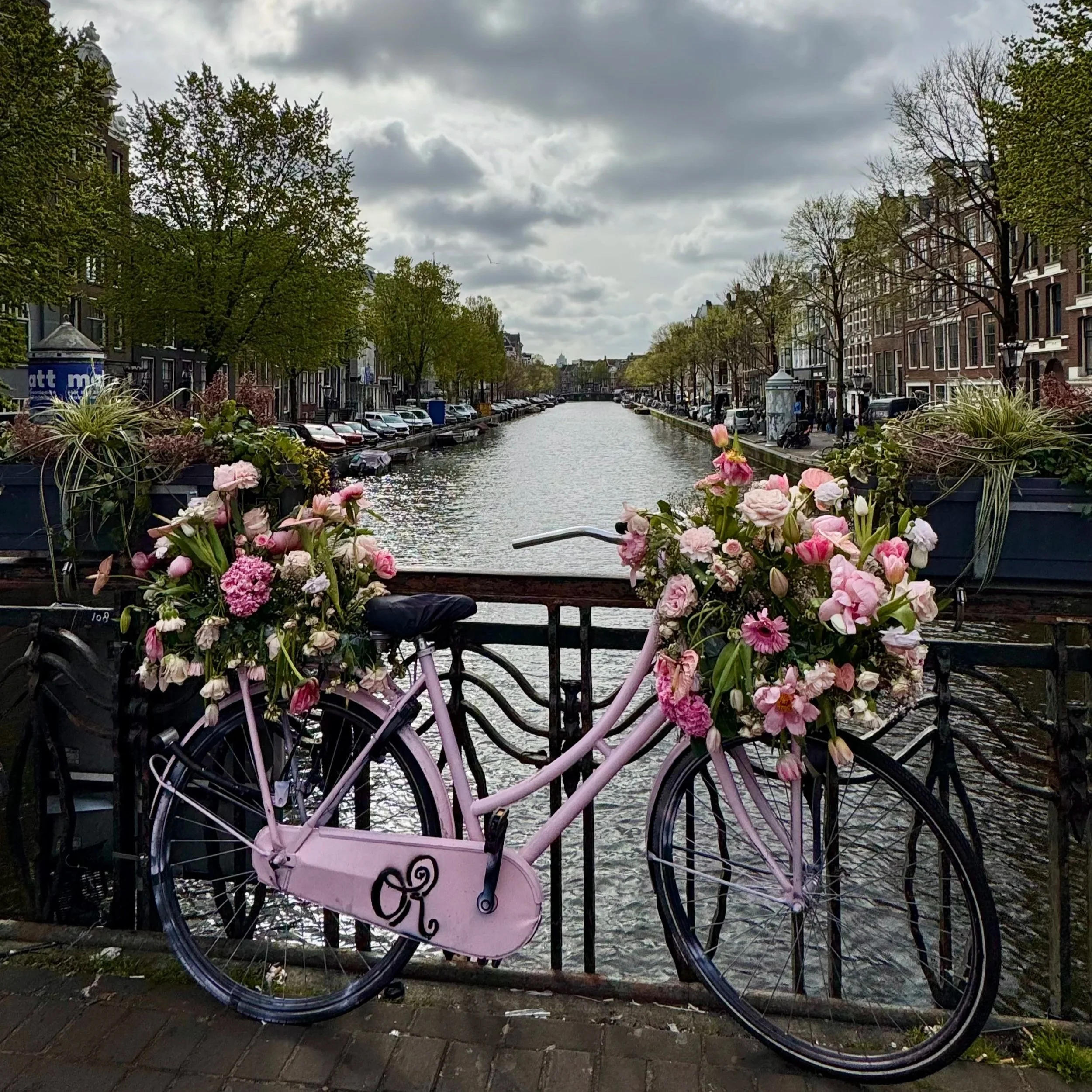
Just one of the thousand-plus canals of Amsterdam
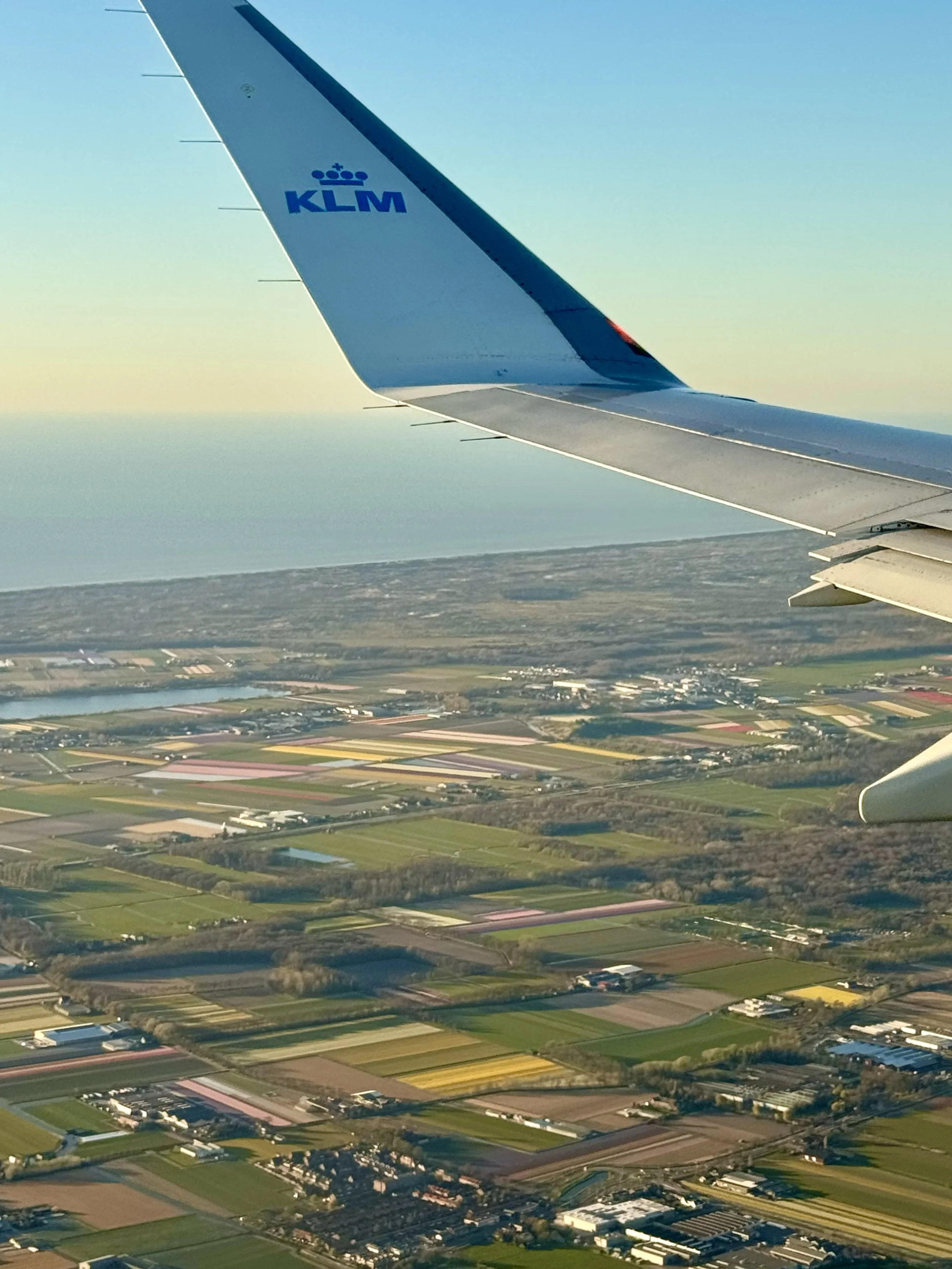
My early evening flight with KLM left Exeter airport and landed at Schiphol airport 65 minutes later. As we flew over the Dutch coast, the pilot pointed out the neat rows of brightly coloured tulip fields below us.
I arrived at 19:30, so by the time I got into the city and checked into my hotel, I only had time to meander to a nearby supermarket and grab some food.
As a solo female traveller, safety is a top priority when booking a hotel. Budget also plays a part, and as much as I would have liked to stay in a more expensive property on a canal, I need to balance the two.
I chose the quirky and comfortable Huygens Palace Hotel located in the Leidsplein district. It’s close to the Museum district and perfectly placed for multiple tram routes. It’s created from three neighbouring buildings and is a warren of narrow hallways and steep staircases. I was warned that the small single room was indeed small, but it was ideal for my needs and even had a tiny fridge, kettle and coffee maker.
Day 1 – Keukenhof Gardens, Red Light District, and Weed
Keukenhof Gardens
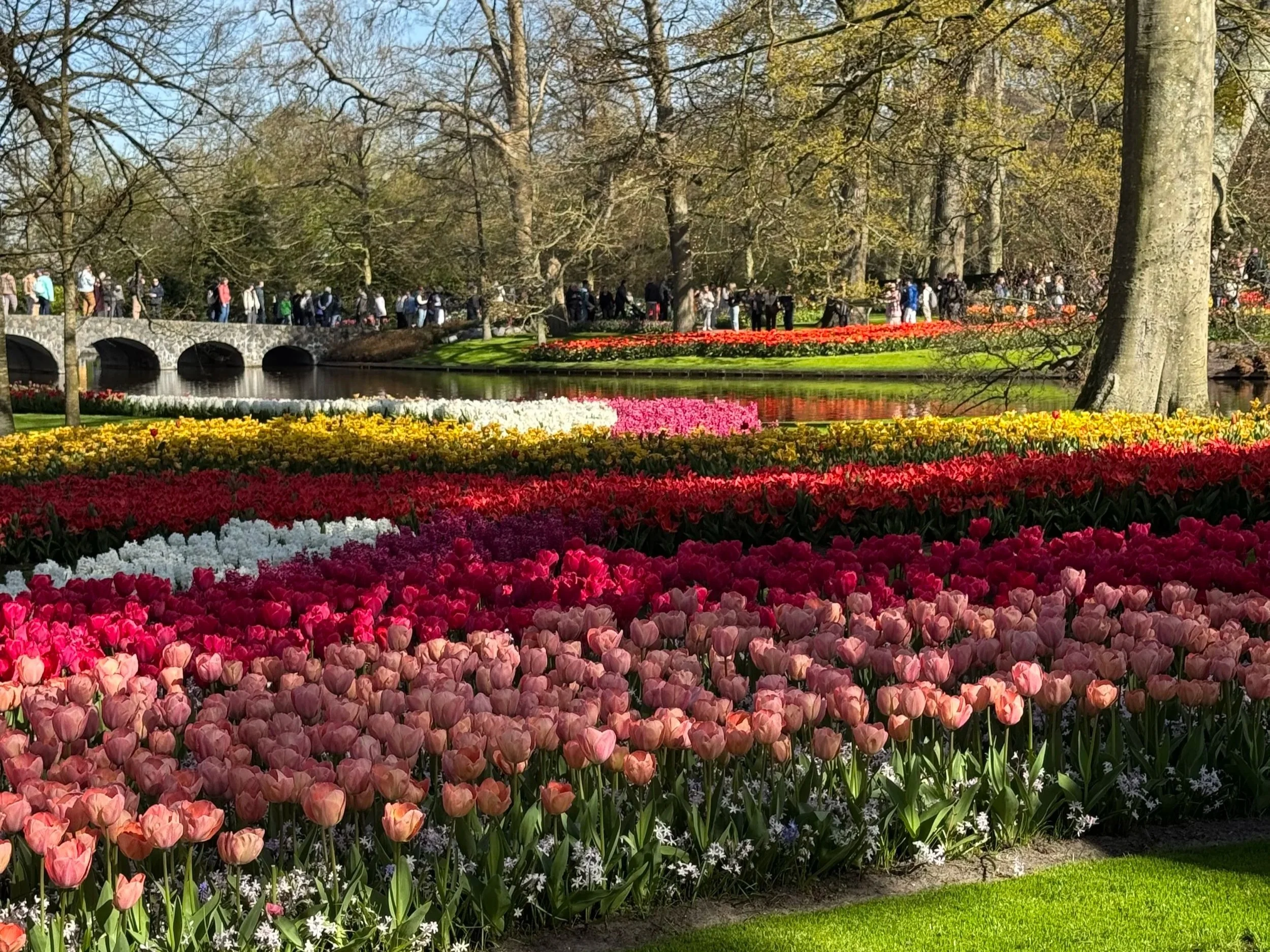
I was out by 8 am to find my way to my pre-booked 9:30 coach to Keukenhof, as my entrance ticket was valid between 10:30 - 11:00.
There are several options to combine the entrance ticket and round-trip coach journey which are more economical. However, knowing how busy the festival gets, I booked my Keukenhof entrance ticket when they went on sale in December, but the ‘combiticket’ wasn't available then.
The Amsterdam transport system is easy to follow, especially with a little help from Google or Apple Maps. Tram 17 took me to Amsterdam Central Station, where I caught the ferry from dock D to Buiksloterweg. It’s a roll-on roll-off style for pedestrians, bicycles, and the odd moped, similar to the Staten Island ferry in New York, and Shetland inter-island ferries. It literally takes a couple of minutes to cross this wide waterway, which separates Central Amsterdam from Amsterdam Noord.
The coach ride took around 50 minutes, but can take over an hour at busy times during the tulip festival season.
I arrived at 10:25, and the park entrance was already busy with hundreds of people. The queues moved very quickly, and within five minutes I was exploring the beautiful floral displays. I only stayed for four hours, as I had to be back in Central Amsterdam by 17:00.
I wrote a short blog about Keukenhof, which you can read here if you’re interested.
Amsterdam’s Red Light District
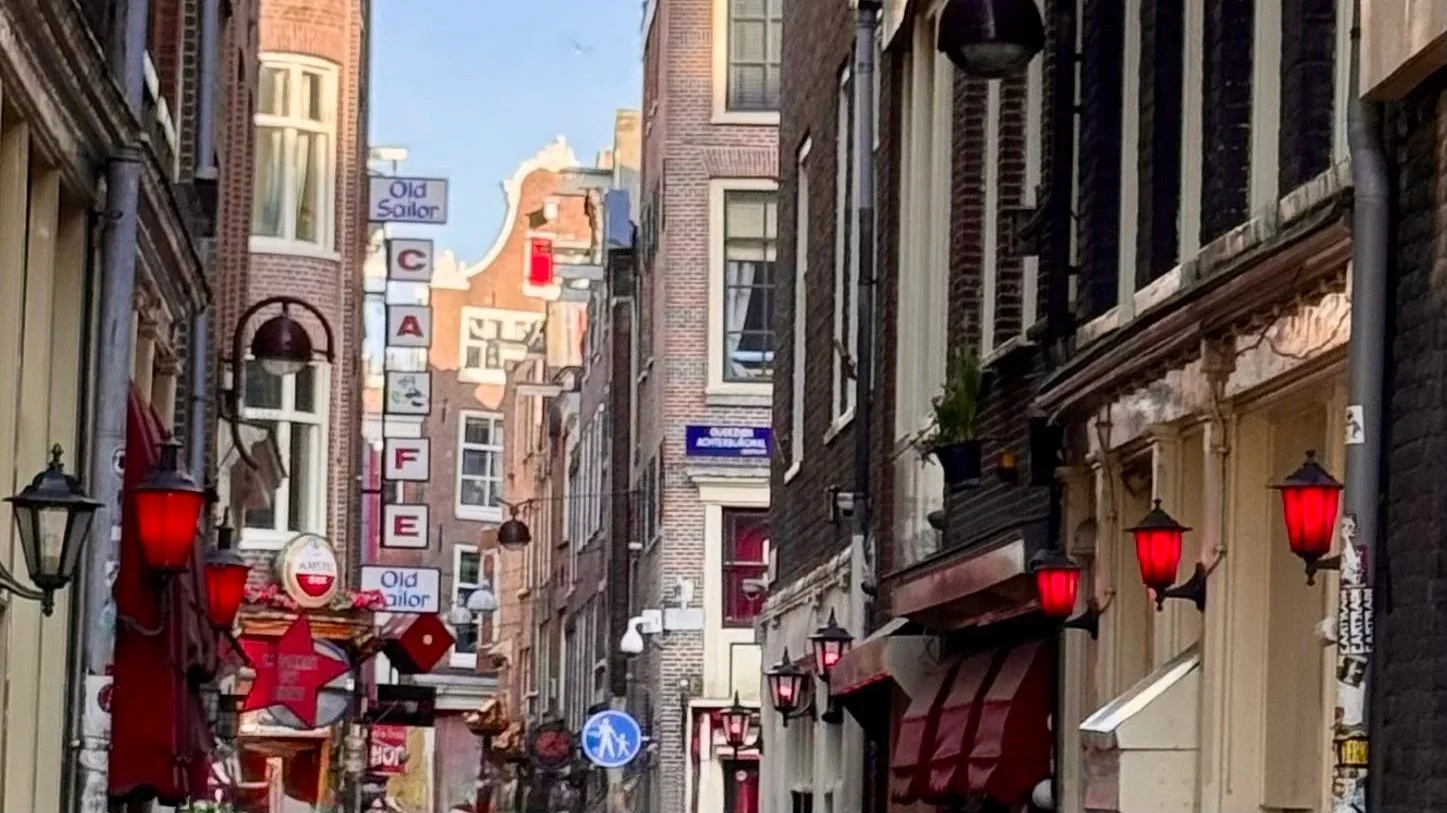
During my younger years, the infamous Red Light District had a seedy reputation. Over recent decades, Dutch laws, health checks, and safety requirements relating to sex workers have changed, and since 2000, it has been recognised as a fully legal profession.
I booked a two-hour guided tour on Viator. It cost £25 and started at a coffee shop (not to be confused with cafes, more on that later) close to Amsterdam Central Station, with a group of eight tourists.
The guide was friendly, relaxed, and informative, telling us about some of the city’s history and the sex industry.
Amsterdam was originally a walled city with a busy harbour. The Red Light District is located in the De Wallen (The Walls) neighbourhood in the Centrum District and has been active for almost 800 years. Throughout history, sailors and merchants would come ashore and visit the women. Between 1602 and 1799, many of these men worked for the Dutch East India Company. It was one of the world’s most successful and ruthless businesses, trading in spices, often obtained by extreme violence, cruelty and slavery. Apparently, only one in three sailors came home, leaving widows, many of whom had no choice but to become sex workers.
The walk led us past one of only two remaining original wooden buildings in the city, this one being a pub/’brown café’ called In ‘t Aepjen, built in 1475, with an interesting history.
A little further along, we came to the gay bar called Café The Queens Head, which holds drag queen bingo evenings, and has some rather revealing ‘Ken’ type dolls in the window. We passed cafes, bars, and takeaways, as well as sex toy shops with items on display that made my little mind boggle!
The Red Light District wasn’t as I had imagined. We arrived at a narrow, nondescript lane that I could easily have walked past.
It’s important to know that I was not intending to saunter past and ogle at the workers, and certainly wasn't going to take photos. I simply had a genuine interest in the area and wanted to improve my understanding. As I walked briskly along the lane, it was easy to spot women in glass-fronted booths. They were clothed in lingerie, not naked as I had expected. Most were on their phones, simply waiting for a customer to knock on the door to ask about their services and prices. I only spotted the red lights above the doorways once I reached the other side of the lane.
The lane led to a canal bridge, where both sides of the canal were lined with various sex and peep shows, boutiques, cafes, bars, and coffee shops. This led to another lane and a canal bridge, which had a beautiful church at the end.
I was there around 19:00 and, although busy with pedestrians, many of the cabins were empty. The guide explained that it was shift change time, and that the evening and nighttime are far busier.
I now know more about the industry and am glad I took a guided tour.
Amsterdam’s Coffee Shops
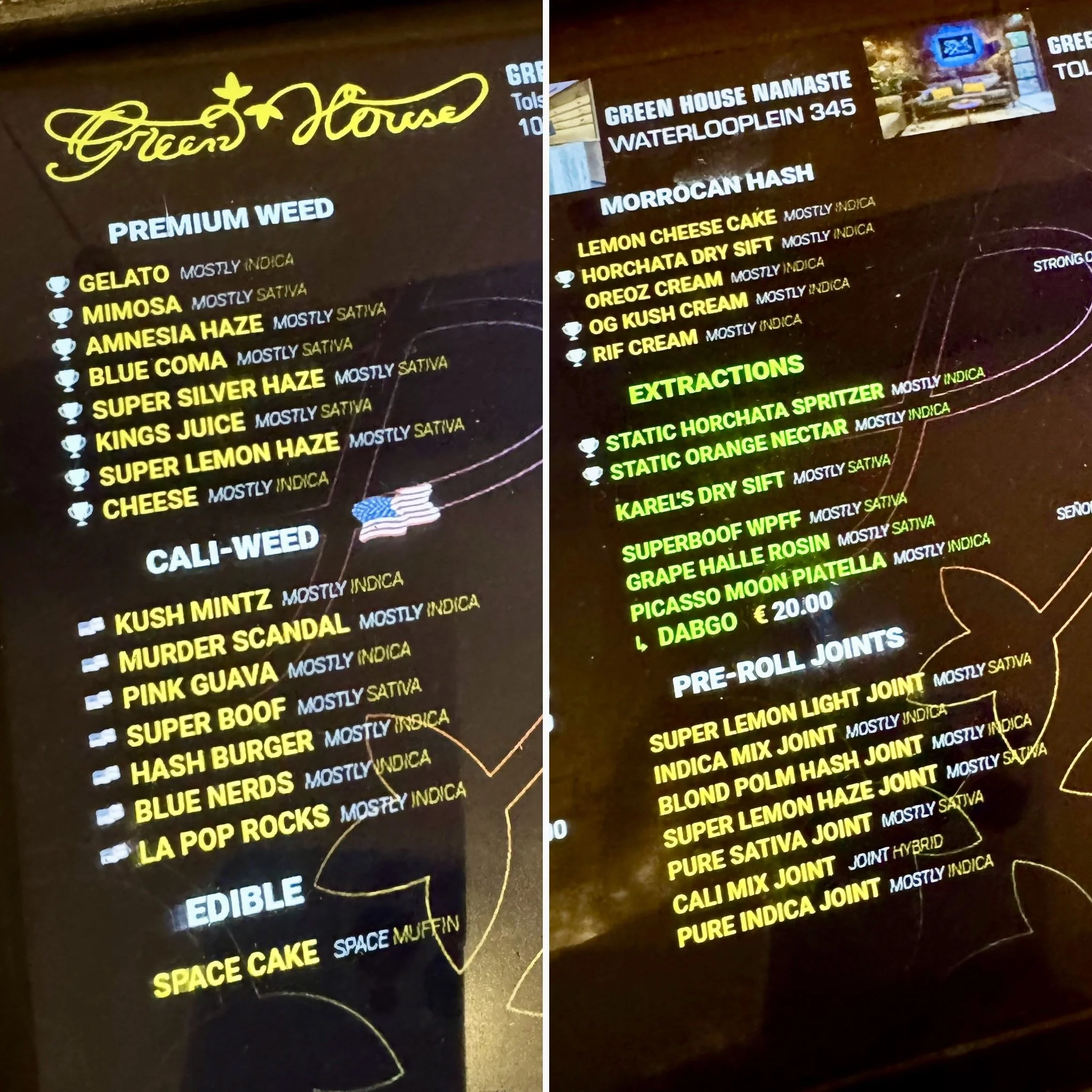
I quickly discovered that in Amsterdam, ‘coffee shops’ and ‘cafes/brown cafes’ are two very different types of establishments.
Cafes/brown cafes are a mix between a pub and a café. A guide explained that the term ‘brown’ came about because they are relatively dark and cosy inside and, in past years, had stained walls and ceilings from cigarette smoke.
Coffee shops are not allowed to sell alcohol, but are licensed to sell marijuana, hashish, and cannabis products. Tourists are still legally allowed to purchase the products in Amsterdam, whereas some Dutch cities are restricting this.
I wanted the full ‘Amsterdam experience’, so on a guide’s recommendation, I visited Greenhouse located at Oudezijds Voorburgwal 191, close to the Red Light District.
Being pretty naive of all this, I thought there was strong hash and weak hash. Oh, how wrong I was! I was amazed that, similar to a bar, there was a full menu of products. Some were sold loose, others as pre-rolled joints. Some made you happy; others made you feel relaxed. Some were mixed with tobacco; others were not. And there were so many flavour options.
The staff were excellent. I explained I wanted something very mild. They recommended a pre-rolled joint without tobacco, explaining it was purer as tobacco is addictive. It cost EUR 9. They made sure I was sat with the shop host to ensure I had no adverse reaction. I lit it and took a drag. It tasted very earthy, which I wasn't keen on. Over 20 minutes, I had two more drags and left the rest. It didn’t appear to have any effect on me, but I was aware I had to get back to my hotel and didn’t want it to have a delayed effect.
On the walk back, I stopped off at a KFC and bought a bucket of chicken tenders, which I happily demolished! My daughters are almost positive I had the ‘munchies’.
Day 2 – Anne Frank’s House, canal boat ride and Dutch food tour
Anne Frank’s House
Tickets for the museum go on sale every Tuesday at 10 am CET, six weeks before the week you want and sell out very quickly. On 24th February at 8:45 am UK time, I was online and poised for the 9 am release time. Sadly, when I got through to the payment part, the system jammed, and I didn’t get one.
As my food tour didn’t start until 1 pm, I took a morning stroll through the city, heading towards Anne Frank’s house and museum, to see if there might be any cancellations. The queue was long, with no chance of me getting one.
Amsterdam canal boat ride, architecture, and bridges
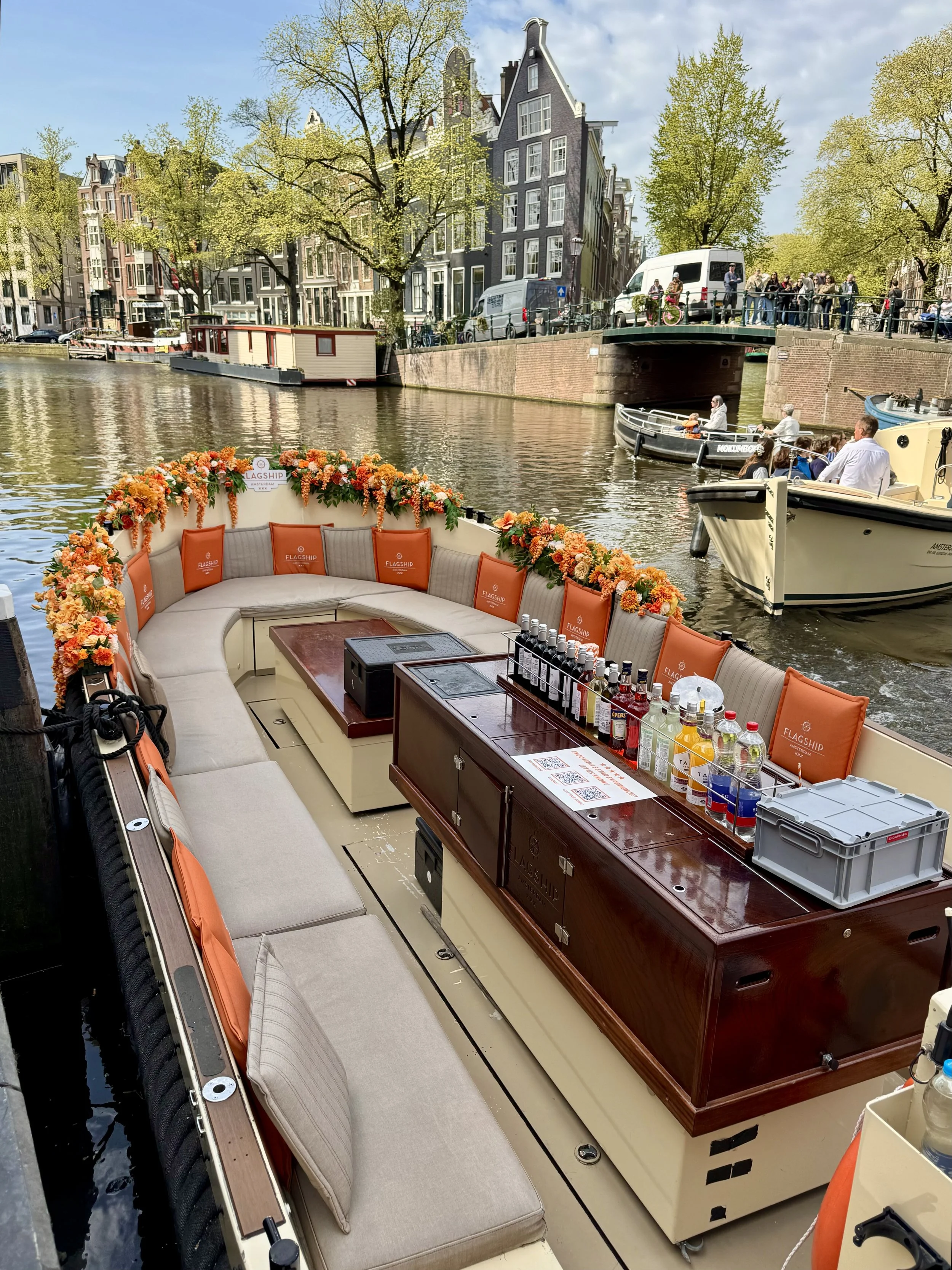
An impromptu, relaxed trip through a small section of the city’s network of canals – there’s over 100kms of them!
As with many buildings in Amsterdam, Anne Frank’s house was located on a canal, and as I walked along the street, I spotted a canal boat trip leaving in five minutes. They had room for one more, so I paid EUR 20, and off we went.
The guide explained the history and different styles of buildings that line the canals. Some were residential and others commercial, many linked to the riches made during the years of the Dutch East India Company.
The reason many of the buildings are wonky is that the foundations are tall wooden trees drilled down through soft boggy soil into sand. The trees, which were imported from Norway and Germany, are between 15-20 metres long and have been slowly rotting over the centuries, causing many buildings to lean in various directions. There are many instances where filler has been used to fill in the large spaces created and stabilise the buildings. Many are still painted in traditional colours that previously represented various trades or statuses within the community.
As canal space was premium property, many of the homes are tall and skinny. So skinny that a standard staircase was not possible, resulting in spiral ones being installed. This makes moving home a bit tricky, as it’s impossible to get large pieces of furniture up or down the staircase. The solution was to add pulley systems to the elegant top-floor facades with decorative gables. Many were purposely built to lean outwards, allowing for easier movement of furniture, and are still used today. Mind you, even the ‘standard’ staircases are very narrow and steep.
I imagine if you’re buying an apartment in Amsterdam, you want a ground floor one.
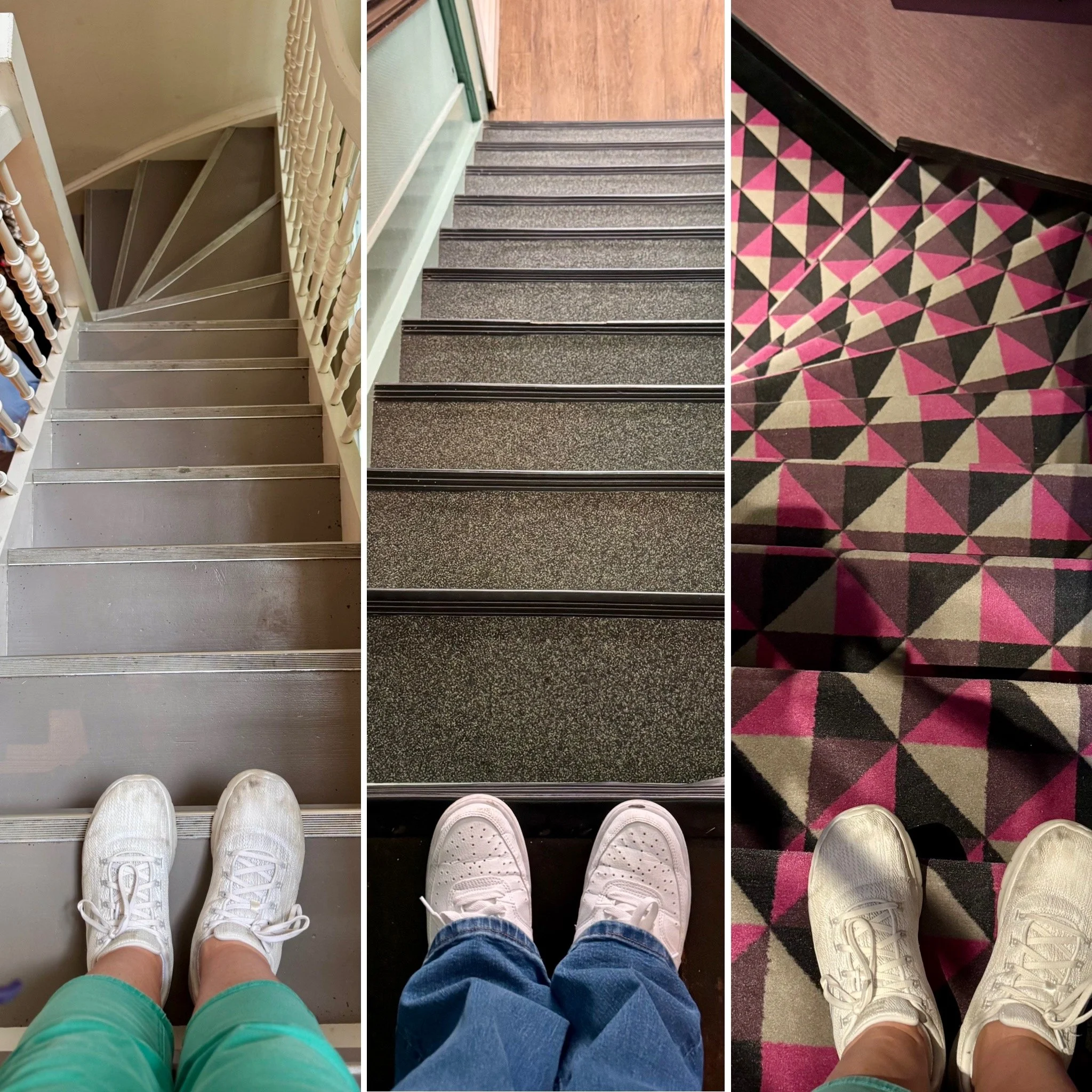
Amsterdam’s standard’ style staircases are steep!
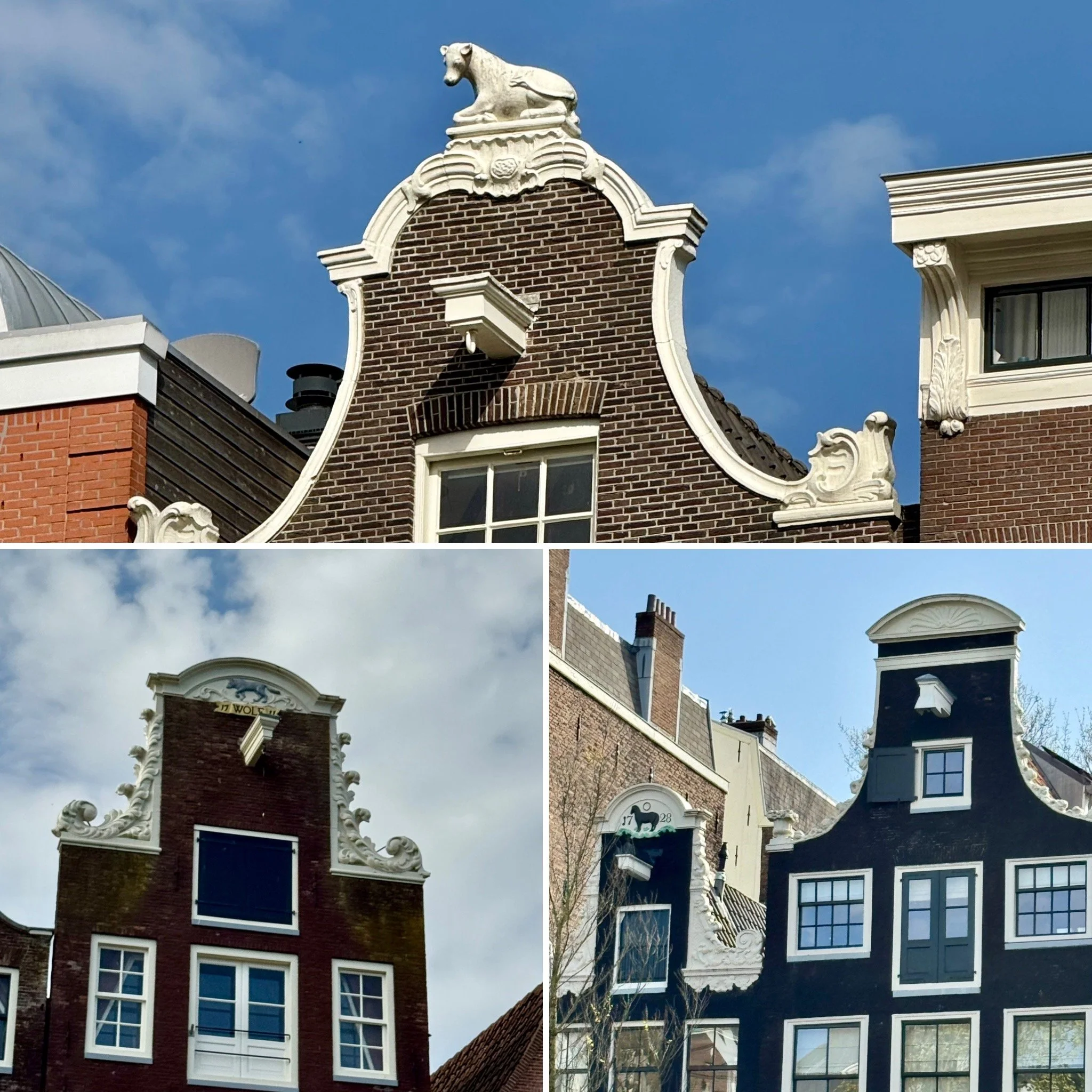
A few examples of the pulley systems sticking out of the tall, thin buildings that line Amsterdam’s canals
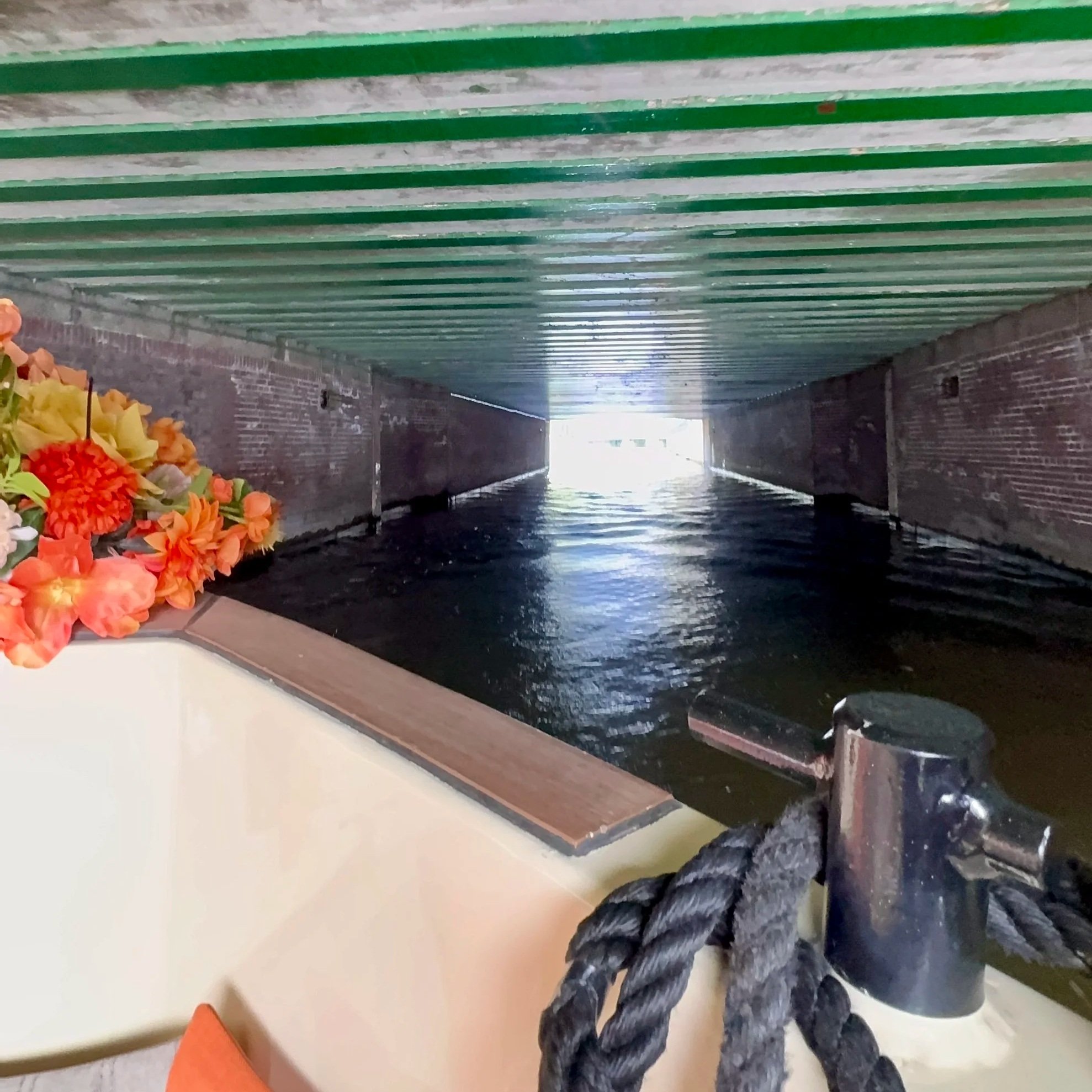
Bridges are everywhere. Well over a thousand. Seeing them from a canal boat highlighted how low they are. At one point, we could see the multiple bridges along Reguliersgracht, where there are seven in total, but as a boat was coming through, I could only easily see five.
We passed locks, houseboats, an old canal-side gaol, and warehouses with red shutters. It’s a beautiful city.
Amsterdam food and cultural walking tour
I booked this through Viator the week before I arrived. At £70, it was quite pricey, but I had £40 of loyalty rewards, which I used to bring the price down.
I purposely avoided breakfast as the guide had hinted there would be a lot of food, over the three and a half hour walk. He wasn’t wrong.
We started at a Henri Willig organic cheese shop. Being from Jersey, I was delighted to learn the cheese was from an organic Jersey cow herd. We then moved to a small café that sold a delicious triple cheese toastie.

Gorgeous Dutch Gouda wheels made from organically raised Jersey cows
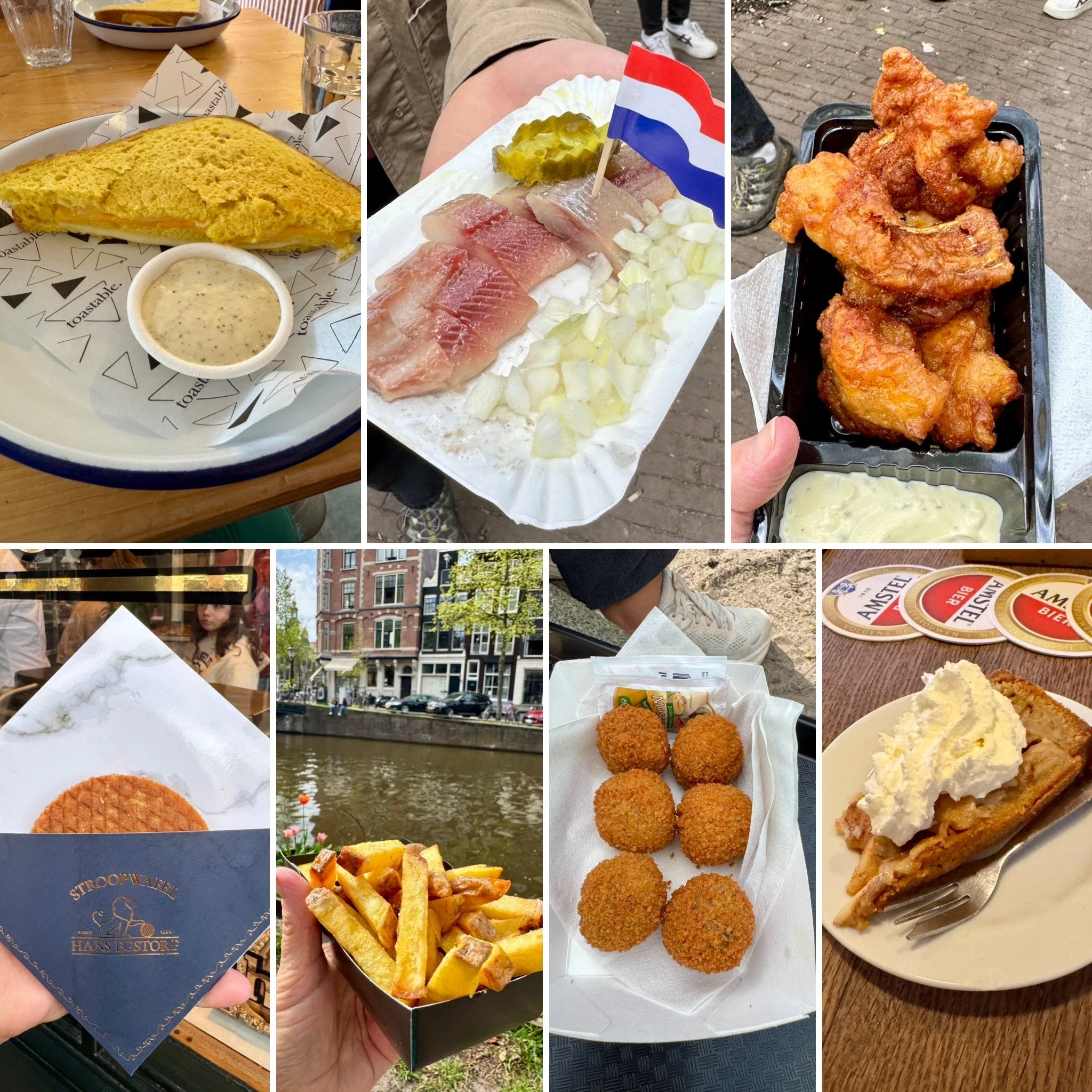
At a street fish kiosk, of which several are dotted around the city, we tried Hollandse Nieuwe, a lightly brined fresh raw herring fillet, served at specific times of the year. Now I’m not a huge fish-eater but was determined to try everything presented. The fillet was cut into small pieces and served with chopped raw onion and pickled gherkin. It was so good that I had another piece. The kiosk also served deep-fried battered cod pieces. Being a Brit, fried cod is basically a diet staple - the Dutch one was too greasy for my taste.
We then walked to the oldest bakery in Amsterdam, Hans Egstorf at Spuistraat 274, (which, coincidentally, I had walked past earlier that morning), where we tried the world-famous stroopwafel. They are pretty sweet, and I couldn’t finish all mine, but I imagine they would go well with a morning coffee.
Next, we were served with a portion of chips/fries from Heertje Friet. They were beautifully cooked – crisp, golden and not at all greasy. We sat on the edge of a canal, and I devoured them. I wasn't as keen on the bitterballen which are a deep-fried breadcrumb-encrusted beef and creamy mash combo. It’s not that they tasted bad, just a bit mushy for me.
By now I was pretty full, but my dessert belly was good to go. Our last stop was a brown café where we had authentic Dutch apple cake with a dollop of cream. YUM.
Me and my happy belly slowly ambled back to the hotel, where I watched an episode of Race Across the World (love it!)
Day 3 aka 2.5
Sadly, I didn’t have enough time to squeeze in a tour of the windmill areas around Amsterdam, as I had to be at the airport by 1:15 pm (some may say I could have got there 60-90 minutes later, but I like getting to an airport early).
I decided to have a lie-in and find a place for Dutch breakfast pancakes.
I had another stroll around the city and now noticed the sign XXX dotted everywhere. They are predominantly seen on the flag of Amsterdam and on many pavement pillars, manhole covers, and buildings. The canalboat guide said they represented a celebration of self-governance, although further research hasn’t fully explained them. One thing they are not is a representation of Amsterdam’s Red Light District.
………
And that’s Amsterdam in a nutshell, although I’m sure I would have found more to do if I had stayed another couple of days, including the multiple art museums dedicated to the Dutch Masters, the windmills, and beach.
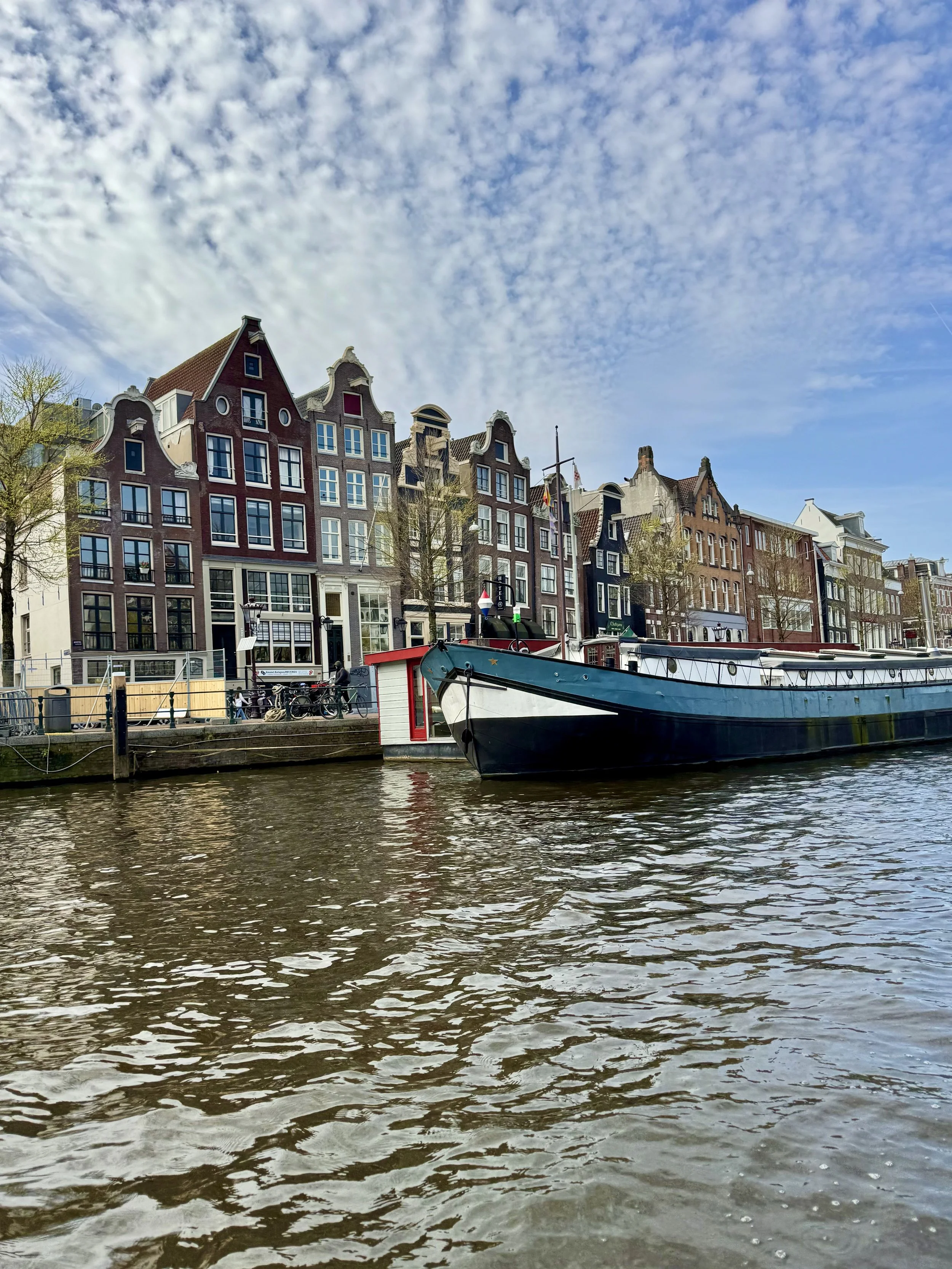
Amsterdam’s tall skinny wonky buildings line the many hundreds of canals across the city
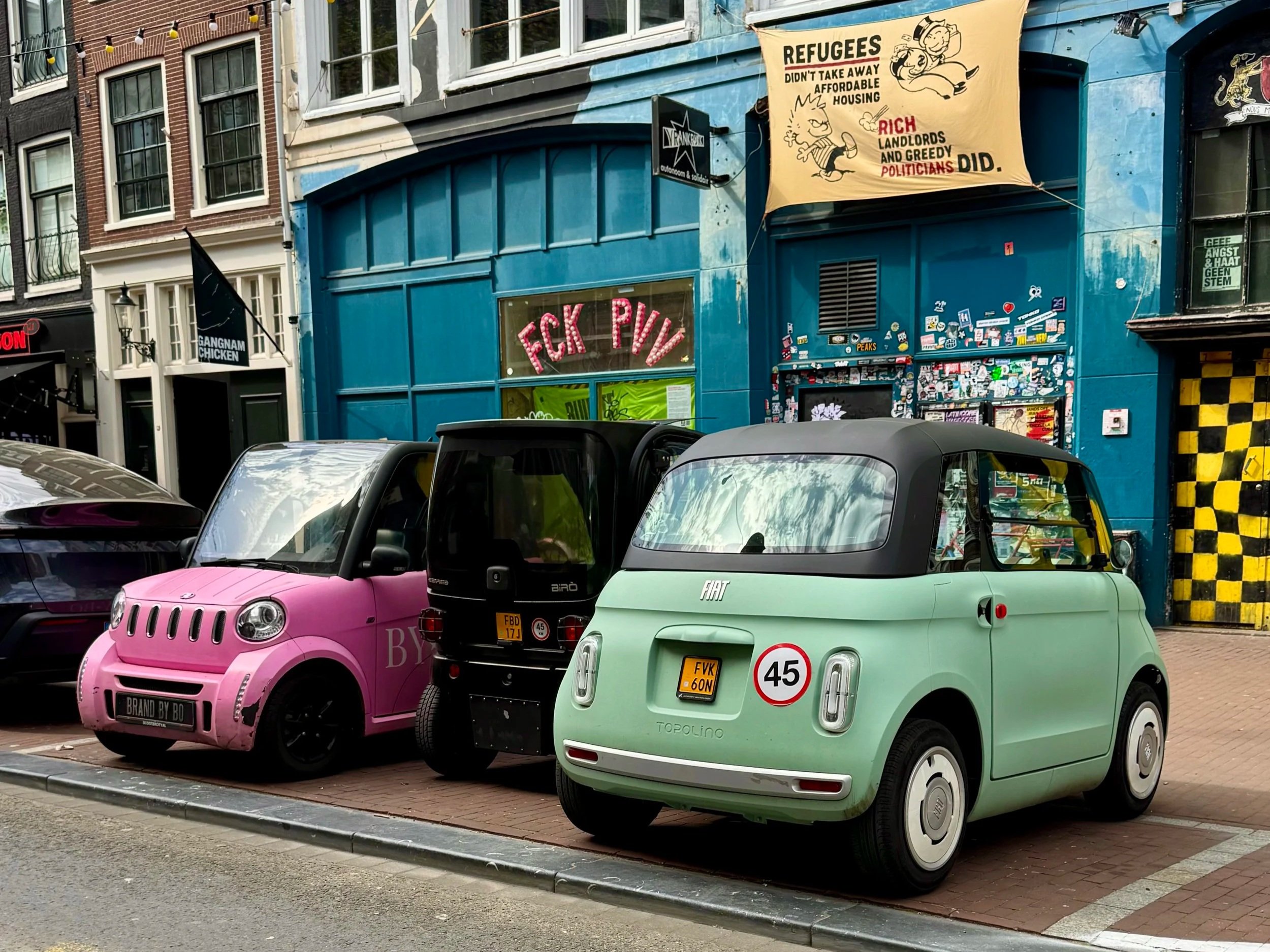
Three tiny city cars parked in the space one standard car would take