
Touring Scotland: From Shetland to Ardnamurchan, and Everywhere in between
Inverness to John O’Groats; The Orkney and Shetland Islands; Aberdeen to Fort William; and Edinburgh. Travelling across Scotland and its islands by train, bus, coach, car, motorhome, ferry, tandem, and almost by plane was an unforgettable adventure.
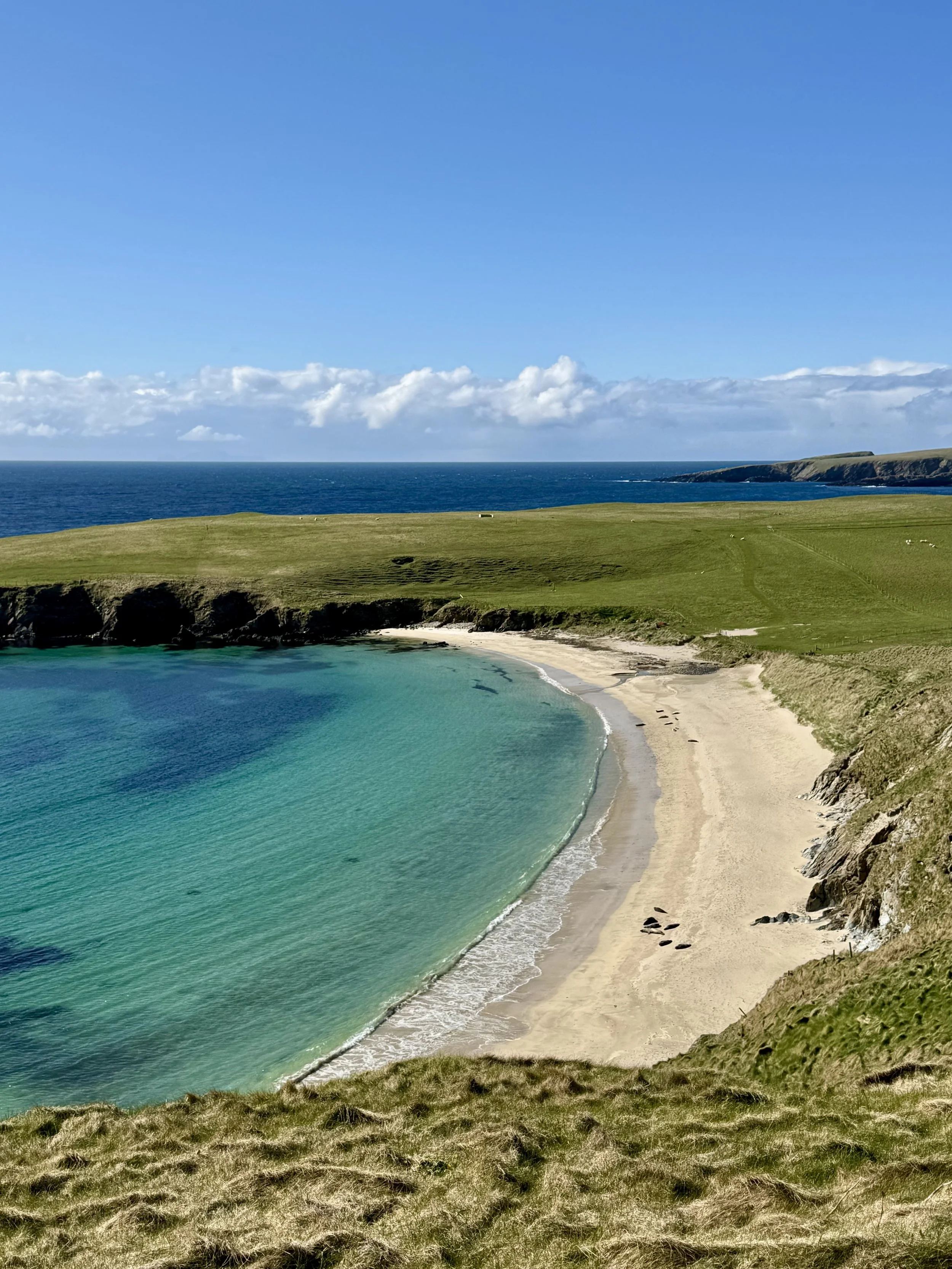
Seals sunbathing on Rerick Beach, Shetland
Is visiting Scotland worthwhile?
A resounding YES.
I first visited Scotland aged twelve with my parents during a half-term driving tour of England and Scotland. At that young age, the incredible scenery was completely wasted on me, so I’m delighted I returned almost fifty years later.
Scotland is arguably best known for bagpipes, tartan kilts, and sporrans, with haggis, whisky, and Nessie close behind. Not forgetting their unique New Year’s Eve celebration known as Hogmanay, and Robbie Burns’ poem ‘Auld Lang Syne’ being sung by millions around the world, as the clock strikes midnight.
I knew about the Highlands, lochs, Great Britain’s tallest mountain, Ben Nevis, and the three island groups, the Orkneys, Shetlands, and Hebrides. Or thought I did.
Experiencing them was extraordinary. Nothing prepared me for the sheer scale and beauty of the Scottish landscape. This country, located a few hours north of me, is breathtakingly beautiful.
It has everything. Vast glens and rivers. White sandy beaches and stunning seascapes with the clearest water. Magnificent wildlife, from puffins and orcas, to red deer and golden eagles. Bridges and viaducts, including the world famous Glenfinnan Viaduct used in the Harry Potter films. Great cities and friendly people.
My reason for visiting Scotland
I turned sixty in January and decided I wanted to do or see sixty new things, or ‘Firsts’, before my 61st birthday. I called it ‘60 Firsts by my 61st’. Actually, I can’t take credit for the name; my eldest daughter came up with it, and it perfectly captured what my challenge was all about.
I’ve been documenting my progress on Instagram and TikTok @60Firstsbymy61st.
Four of my Firsts were to reach the most extreme NSEW points of mainland Great Britain:
Northernmost - Dunnet Head, Caithness, Scotland
Southernmost - Lizard Point, Cornwall, England
Easternmost - Ness Point, Suffolk, England
Westernmost - Ardnamurchan Point, Highland, Scotland
Having reached Lizard Point in June 2025, my focus turned to Scotland, where I could tick off another two.
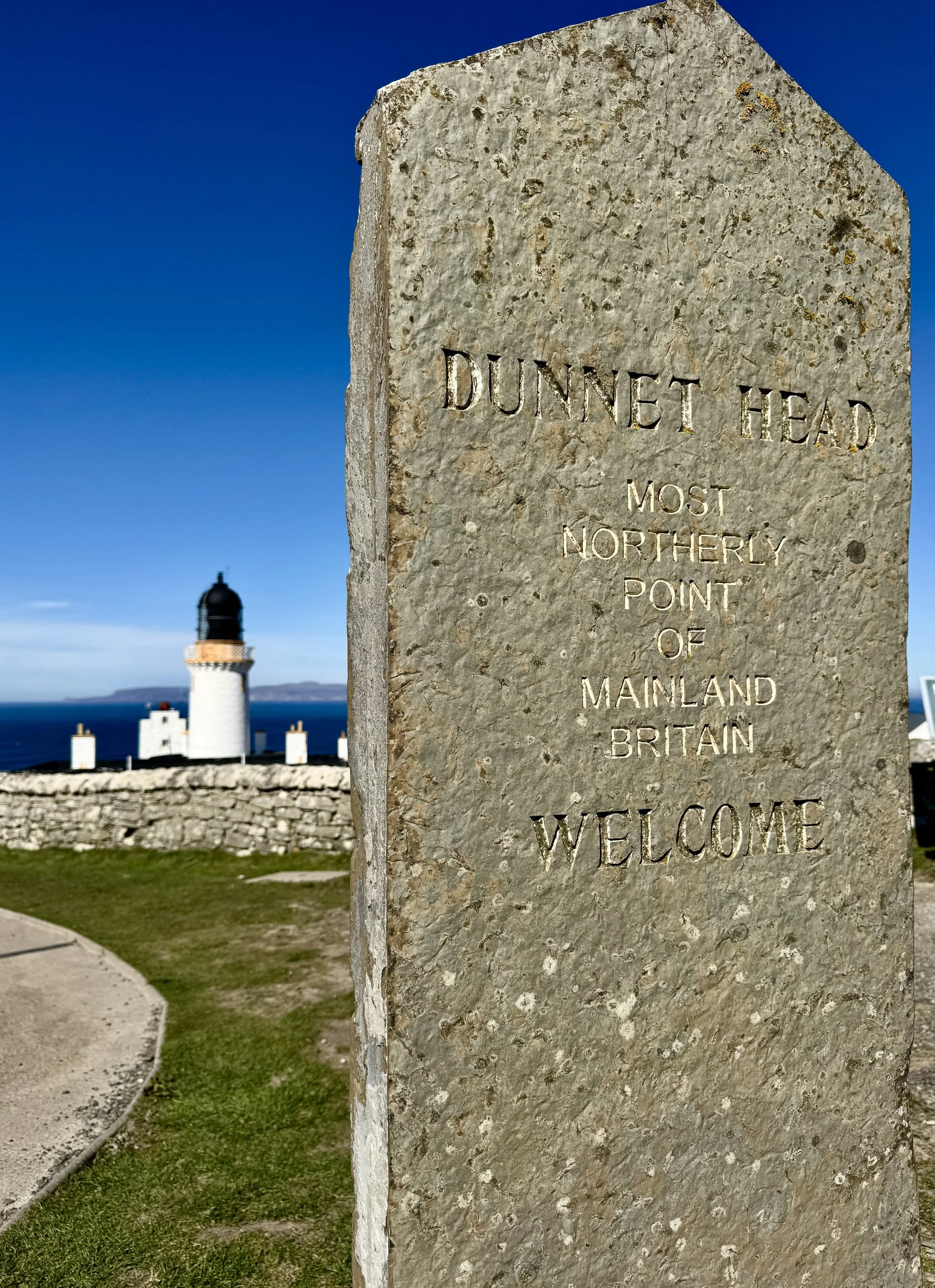
Dunnet Head the northernmost point of mainland Britain
I organised the twelve-day trip for early May, which, although much cooler than the summer, was a perfect time of year. It meant missing the pink and purple heathers as they don’t usually bloom until July onwards, but avoided ‘midge season’, although the notorious little beasties can arrive as early as late April.
It was a full-on itinerary as, not satisfied with seeing mainland Scotland, I decided to squeeze in trips to both the Orkney and Shetland Islands. In hindsight, I wish I had stayed another three days to see the Hebrides too. Hey ho! It just means I’ll have to visit again.
Travelling around Scotland
Traversing this beautiful country and its islands was an unforgettable experience, especially by using pretty much every form of transportation available: train, bus, coach, car, motorhome, ferry, and even a tandem.
I had fully intended on doing this as a solo trip, but I have an adventurous friend who I thought might like to join me. The second I uttered the words ‘Caledonian Sleeper from London’, she was in.
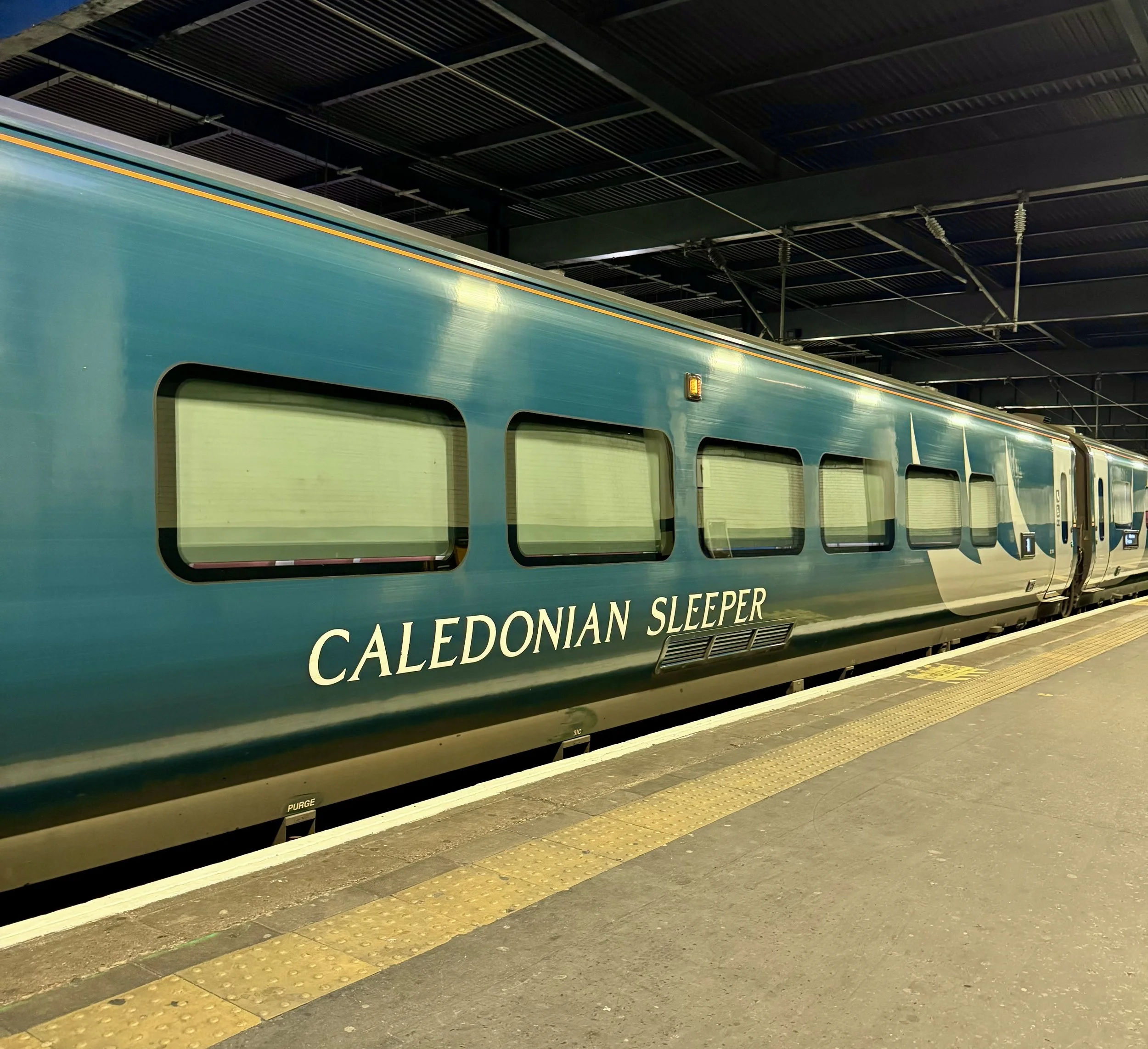
Caledonian Sleeper train at Euston Station, London
London to Inverness - The Caledonian Sleeper
For decades, I have dreamed of taking an overnight journey on a sleeper train, so this seemed like the perfect opportunity. The eleven and a half hour journey departs from Euston Station, London, at 21:15, and arrives in Inverness, Scotland, at 08:45, the capital of the Highlands and farthest north city of Great Britain. It also goes to Aberdeen on the east coast, and Fort William on the west coast.
I knew it was going to be pricey. For two people in a Club en-suite cabin, it cost us a total of £410, but the experience was worth it. Depending on the date of travel, there are slightly cheaper fares.
The Caledonian double en-suite cabins are more expensive, and the Classic bunk bed twin without en-suite starts from just under £300. The cheapest, but less comfortable, option is a seat, priced around £60 each.
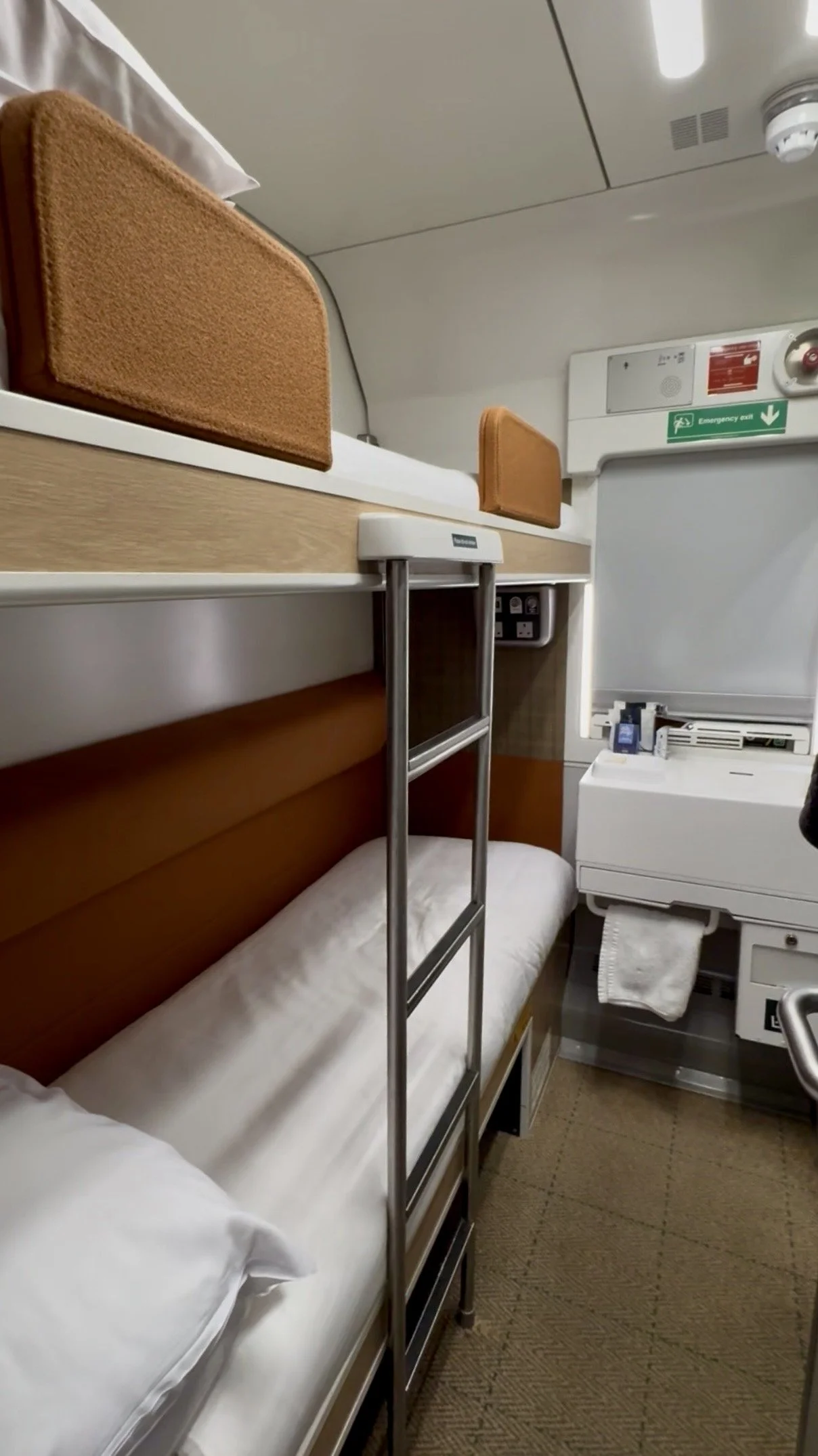
Caledonian Sleeper Train - Club en-suite cabin K1
Club en-suite cabin K1 was snug but functional. There was a sink just below the window, in the sleeping area. Plug sockets and charging points by the bed - I recommend taking a decent length cable. The bunk bed mattresses were extremely comfortable, and the en-suite toilet and shower ideal, although I couldn’t get much more than a dribble out of the shower (not sure if it was me or a faulty shower).
The ticket includes access to the station lounge before boarding, The Club Car serves Scottish staples, as well as drinks, ideal to enjoy as it’s leaving London. Breakfast is served in the Club Car or delivered to your room. The Full Scottish was delicious, and made even better as we watched the Scottish scenery through the windows.
I wore the complimentary eye mask and earplugs, and had envisaged the gentle melodic do-dong, do-dong sound as the train rolled over the tracks. In reality, it was a lot louder, and the multiple station stops definitely disturbed my sleep, so we arrived at Inverness a little more tired than expected.
Tip: We shared a breakfast table with a regular traveller on this route, and he recommended cabins numbered 4-6, as apparently they are not over the wheels, which he thought might be why our cabin was noisy.
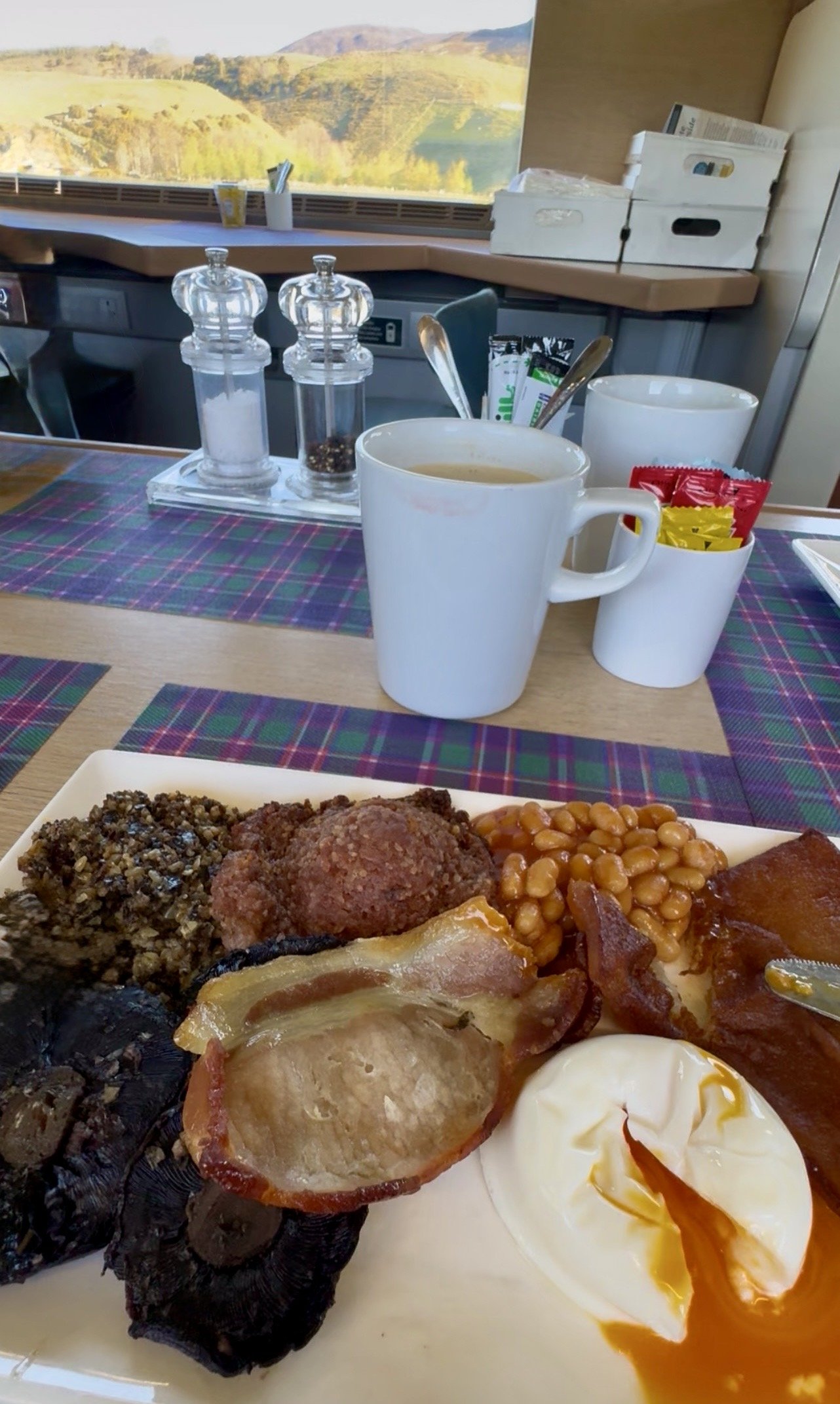
Eating a Full Scottish breakfast as the Scottish countryside whizzes by
Inverness to Castletown - Stagecoach bus
During the two hour wait before the bus departure time, we strolled through the city, along and over the River Ness, spotting Inverness Castle high on the riverbank.
Not knowing how busy the bus would be, I booked two single tickets online a week earlier. I was surprised to see that each ticket only cost £2. Two pound for a three and a half hour bus journey. Incredible!
The bus queue was surprisingly small (about fifteen people), with a couple of other passengers also heading all the way to Castletown. My friend and I settled in for the long journey, and watched the Scottish scenery change from city to towns.
The bus route followed the A9 and A99 which hug the eastern coast all the way to Wick. The spring colours were vibrant - the calm blue North Sea, rapeseed fields, and gorse were in full bloom, providing swathes of bright yellow, and hedgerows and trees blooming with new spring life.
As we turned inland from Wick to Castletown, the land flattened out and opened up, with the Atlantic Ocean coming into view.
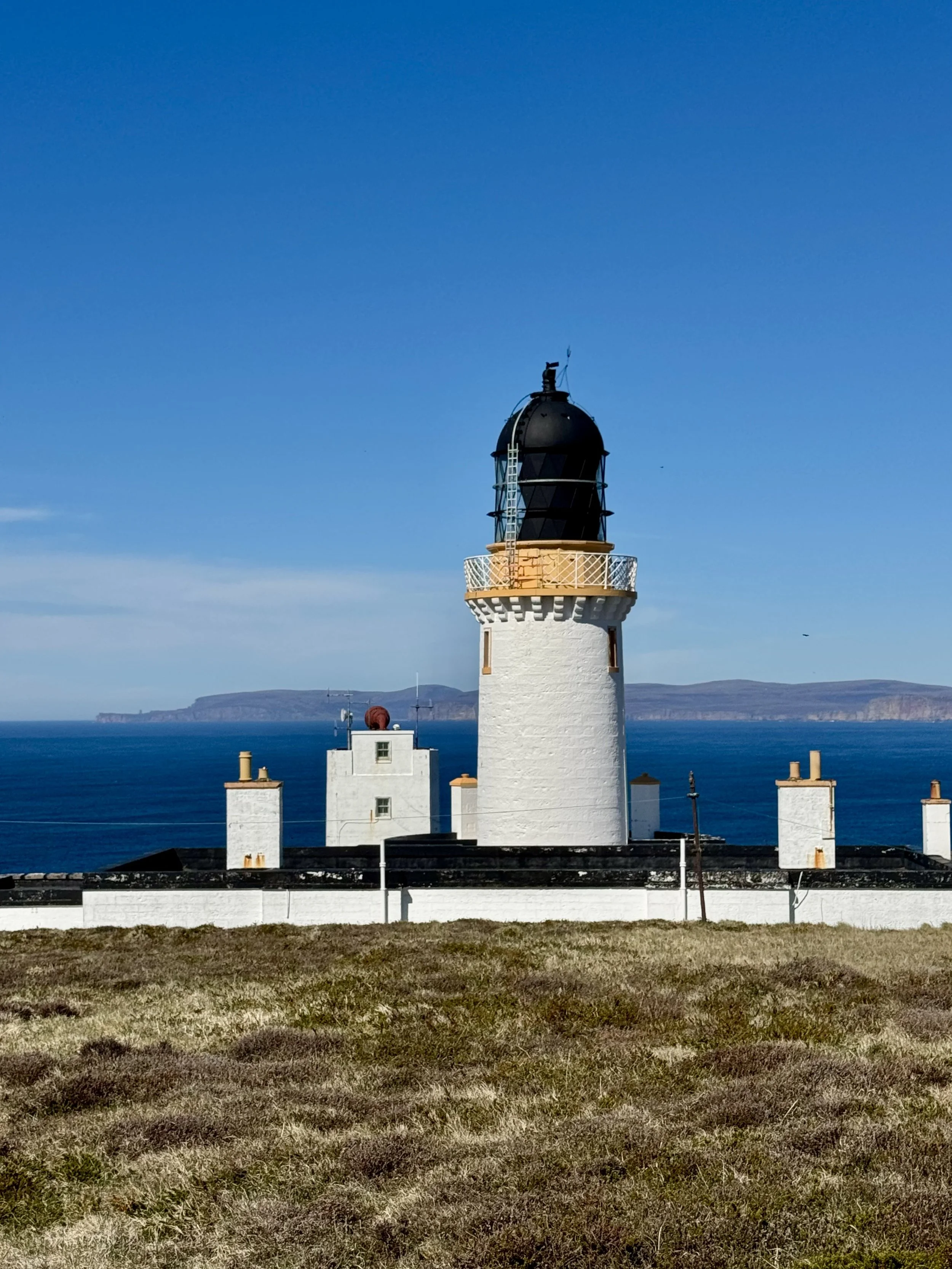
Dunnet Head Lighthouse
Castletown to Dunnet Head & John O’Groats - Taxi
John O’Groats is known for being the northern tip of Great Britain, but it is in fact Dunnet Head, about fifteen minutes from the famous signpost. Buses go to John O’Groats, but not to Dunnet Head, so we booked a taxi pick-up in Castletown. I can recommend Ormilie Taxis, who were excellent and competitively priced. Our bus was delayed but our taxi driver patiently waited for us at the pick up point, which was a relief.
Dunnet Head Lighthouse
Latitude 58°40.287'N
During the drive, he gave us information about the area and made a quick stop at Dunnet Beach, which reminded me of St Ouen’s in my home island of Jersey. Once you leave the main road and head north the road is a windy, bumpy single track. Coming from Jersey, I’m comfortable driving on single-track roads, but at times we hit 50 mph, which was a little hair-raising! Thankfully, due to the openness of the landscape, it was easy to see ahead and brace yourself for the next corner.
The lighthouse is only 20 metres high but is 105 metres above sea level. It was built by Robert Stevenson, a relation of the author Robert Louis Stevenson, who wrote such stories as Treasure Island, Kidnapped, and Jekyll & Hyde. In fact, there was a plaque explaining that most of the lighthouses around Scotland were built by the Stevenson family.
We were incredibly lucky with the weather and able to see the Orkney Islands eight miles away, including the top of the sea stack known as the ‘Old Man of Hoy’.
We then drove on to John O’Groats for the obligatory photo with the signpost. I mean, if there’s no photograph, were you even there?
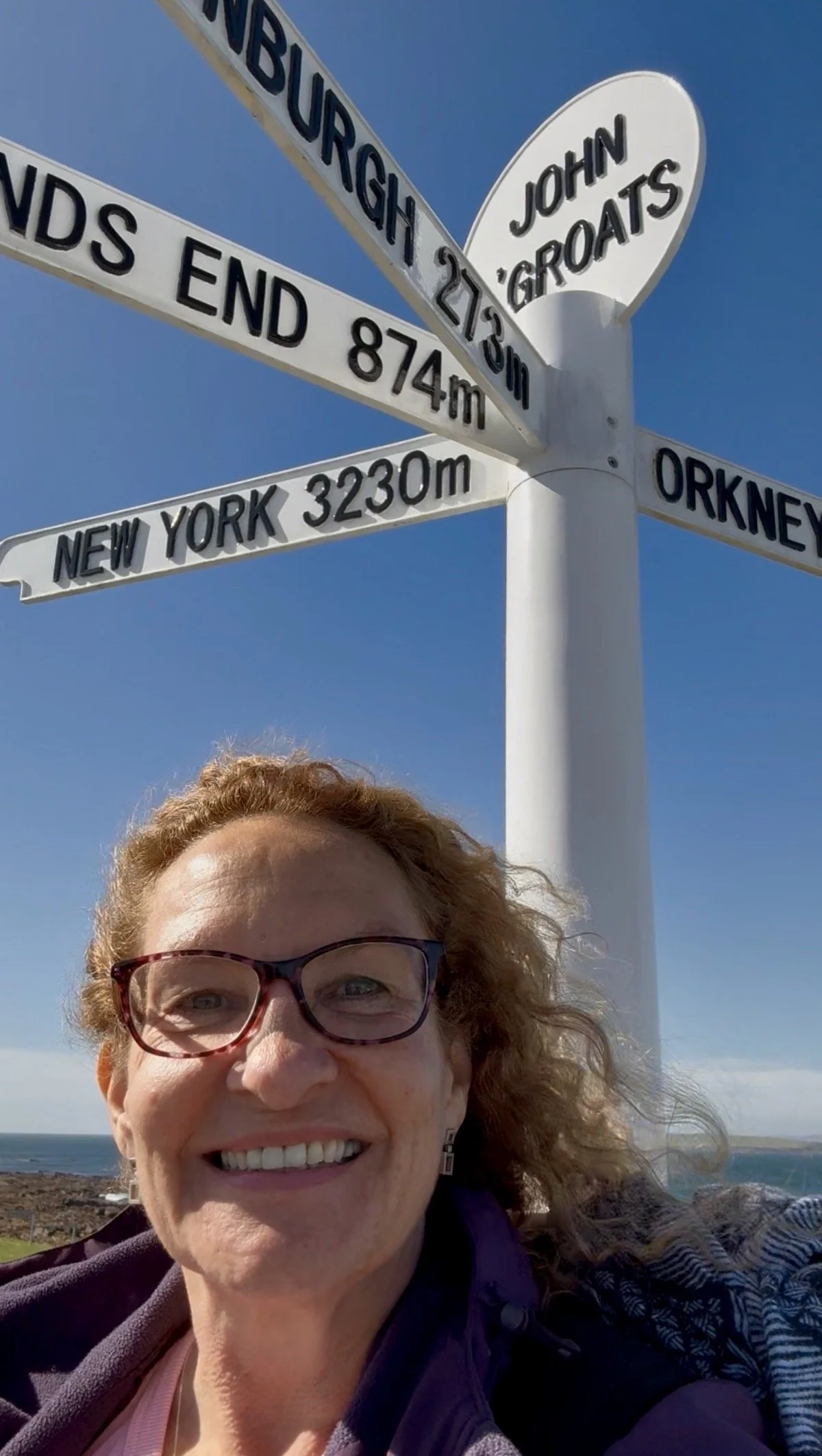
John O’Groats signpost
John O’Groats to Orkney Islands - Bus and ferry
We spent ninety minutes wandering around, checking out the distillery (the first of many we came across on our travels), the gift shop, and having lunch in the cafe.
Then took Stagecoach bus 80 to Gills Bay Ferry Terminal Road, where we checked in for the 18:45 Pentland Ferry crossing to the Orkney town of St Margaret’s Hope on the island of South Ronaldsay. It left earlier than expected, and after the smooth crossing, we docked around 19:30.
NB: St Margaret’s Hope, Orkney, is a quiet village
We planned to get dinner once settled into our Airbnb, and, conveniently, the only restaurant in town, The Murray Arms, was next to our apartment. What we hadn’t realised is that St Margaret’s Hope is a village, and it is usual for the restaurant to stop taking customers at 8 pm and send the chef home. We hadn’t pre-booked and walked in around 8:15 but were too late.
So we walked up to the only other place that may still be serving food, Robertsons Coffeehoose (not a misspelling) and Bar. Unfortunately, they too had sent the chef home. The bar lady was so apologetic, but we understood and actually quite liked the fact that, certainly in this corner of the islands and at this time of year, life moves at a slower pace. We ended up with a slice of coffee and walnut cake and a coffee - a memorable dinner.
Orkney Islands - Bus and tandem
The following morning, we caught the X1 bus from the village to the capital Kirkwall, where we were staying in a Youth Hostel (another one of my Firsts).
As the weather was dry, we decided to hire a bike for the day, but in a moment of madness, hired a tandem (shakes head at own stupidity), which was a First I never expected to do.
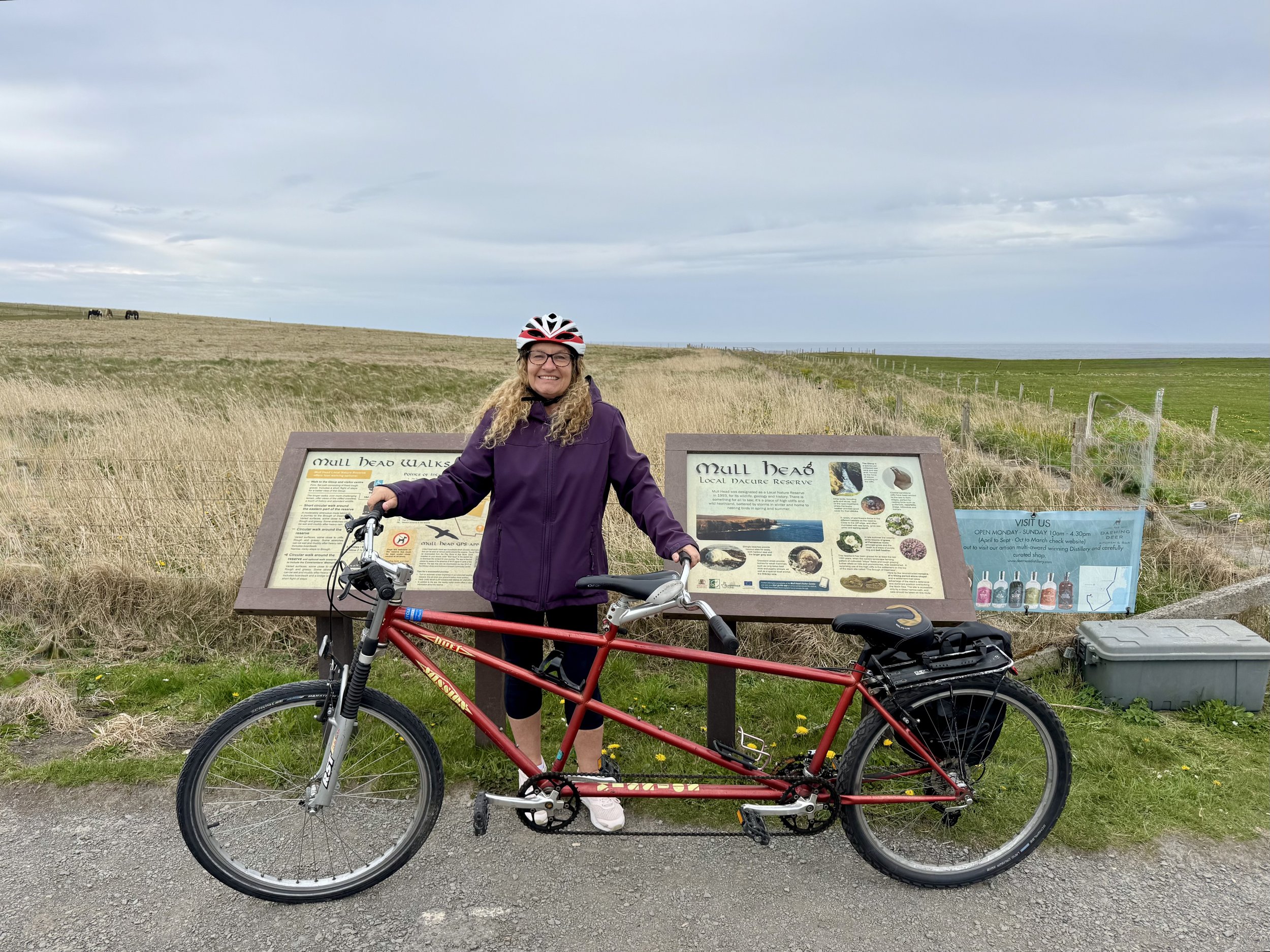
Tandem bike ride to Mull Head near The Gloup, Orkney Islands
The team at Cycle Orkney were brilliant. So friendly and encouraging, giving us advice on which route they felt was the safest. I am not a regular cyclist - the last time I recall cycling was five years ago when I still lived in Jersey. My friend is a far more accomplished and confident rider, and much to my relief, was happy to take the front seat.
A 26-mile round trip to The Gloup in Deerness was suggested, which everyone thought was a great idea, except me. Twenty-six miles! Were they having a laugh? They were not. They were deadly serious and assured me that I could do it. We didn’t have much water and no food, as we intended to grab lunch at a cafe by The Gloup. Turns out, there was no cafe, although there were loos and a visitor centre. We possibly misinterpreted the information, as at the top of the hill, prior to descending towards The Gloup, there is a small grocery store, Deerness Stores, where we should have stopped and bought something.
I survived - just - and the following day we took a four-hour bus tour of the mainland Orkney, and St Margaret’s Hope. The daily T11 service runs through the summer and had only started running a few days earlier. The tour left from Kirkwall bus station at 10 am sharp and cost £2 per ticket. We drove over some of the Churchill Barriers, which were placed to stop German U-boats entering Scapa Flow. We stopped at Stromness and the Ring of Brodgar (a ring of Neolithic standing stones), and passed the Italian Chapel and Standing Stones of Stenness. A great way to get to know the history of the islands.
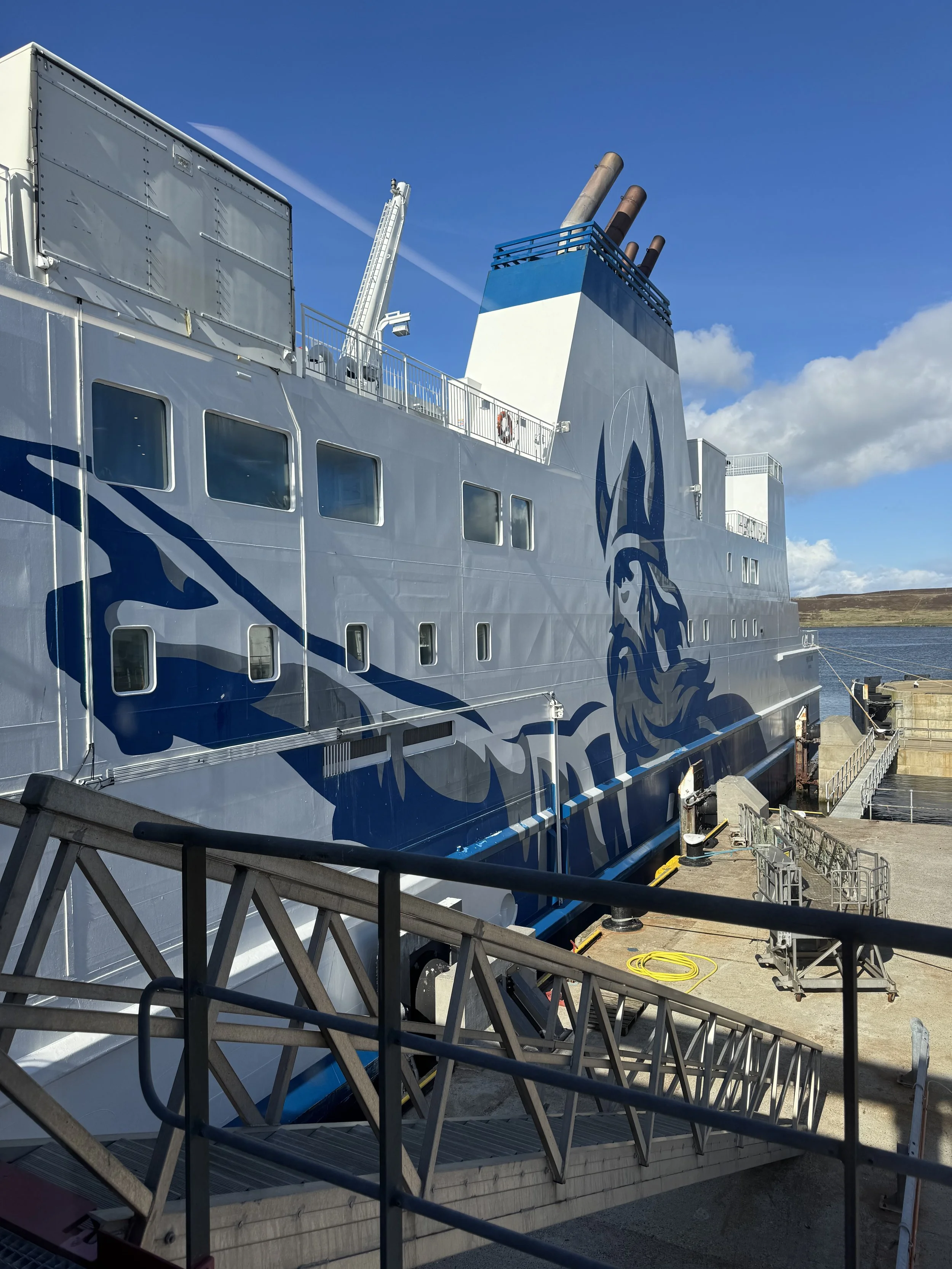
Northlink Ferry serving the Orkney and Shetland Islands
Orkney Islands to Shetland Islands - Ferry
That night we headed to Kirkwall harbour to board the overnight Northlink Ferry to Lerwick in mainland Shetland for a three-day stay. The MV Hrossey is a large ferry with plenty of room to move around, several lounges and seating areas, and good sized bar and dining areas.
As it was an eight hour journey, leaving port at 23:45, we reserved sleeping pods. We were amazed at how cheap it was. The senior concession (still can’t quite get used to the fact that I fall into this category now) foot passenger ticket cost £19.62 each, and the pods were an additional £18 each.
The pods were large with comfortable reclining seats, a built-in USB point and adjustable lighting. A complimentary blanket, pillow and eye mask are provided, and the option to obtain a towel and use the shower. Once settled in, I slept pretty well. My only criticism is that due the size and slanted back of each pod, each row is far too close to the row in front, leaving extremely limited room and pretty awkward to move in and out of them.
We disembarked at 07:30 and collected the hired motorhome from the carpark. I can’t tell you how excited I was about this mode of transport. I have wanted to hire/buy one for years, and it didn’t disappoint.
I’m going to write a separate post about the Shetlands and motorhome experience, as it was so special.
Shetland Islands to Fort William - Ferry, coach and bus
This is where the plane was supposed to make an appearance.
We were going to fly from Sumburgh to Inverness with LoganAir, then bus to Fort William on the west coast. A bus journey of approximately 1.5-2 hours.
I somehow missed the January calendar reminder to book the flights, and by the time I realised, the airfares had doubled to around £220 each. Thankfully, we were able to book another overnight Northlink Ferry, this time from Lerwick to Aberdeen, a city further south than Inverness and much further east, resulting in a much longer bus journey of around 6 hours.
We pre-booked a seat on the FlixBus coach from Aberdeen to Sterling, then caught an Ember bus from Sterling to Fort William. Not only was the whole journey from Shetland 15.75 hours longer, but it also cost each of us £25.41 more in bus fares, as the Inverness to Fort William bus trip is part of the £2 fare routes.
What was nice about the longer route was that it went through some well-known Scottish towns and cities that I wouldn’t have seen otherwise: Dundee, Perth, and Dunblane. Stopping at the Glencoe Visitor Centre meant spectacular views of some Scottish Highland mountains and glens.
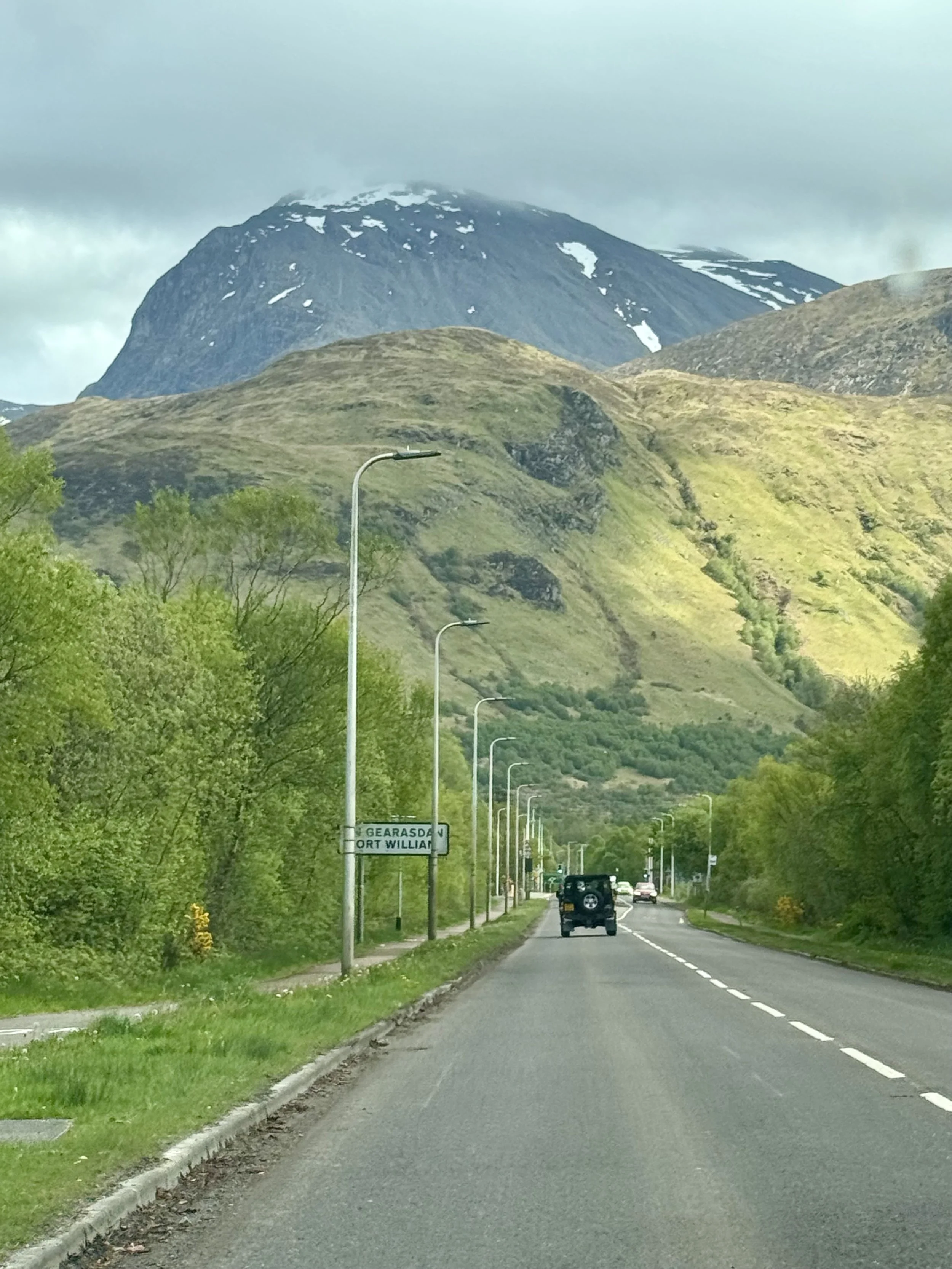
Snowcapped Ben Nevis, Scotland - Britain’s highest mountain
Things to do near Fort William
Fort William sits at the foot of the UK’s highest mountain, Ben Nevis. The town is visited throughout the year by hikers wanting to walk and explore the mountain, and it is also the final stop of the popular West Highland Way walk.
We were using the town as a quick turanaround stop, so didn’t get a chance to visit the Ben Nevis Distillery which holds guided tours.
The reason we went was twofold:
Ride the Jacobite Steam Train over Glenfinnan Viaduct
To get to Ardnamurchan Point, the westernmost point of mainland Britain
Jacobite Steam Train
This train is probably best known as the ‘Harry Potter’ train, and I was delighted to learn it departed from Fort William, as it was not originally on my list of things to do.
Unfortunately, it was not to be. The train usually runs from April to September, but due to some regulatory requirements, it didn’t start running until early June. As it happens, because of the flight mess up, we would never have made it to Fort William in time anyhow.
Glenfinnian Viaduct
However, all was not lost.
Getting to Ardnamurchan Point is tricky, as no buses run there, so we hired a car and booked accommodation an hour’s drive away from the lighthouse. One of the two routes from Fort William to the hotel just happened to take us right past the viaduct, where we were able to stop for a photo, albeit without the iconic train passing by.
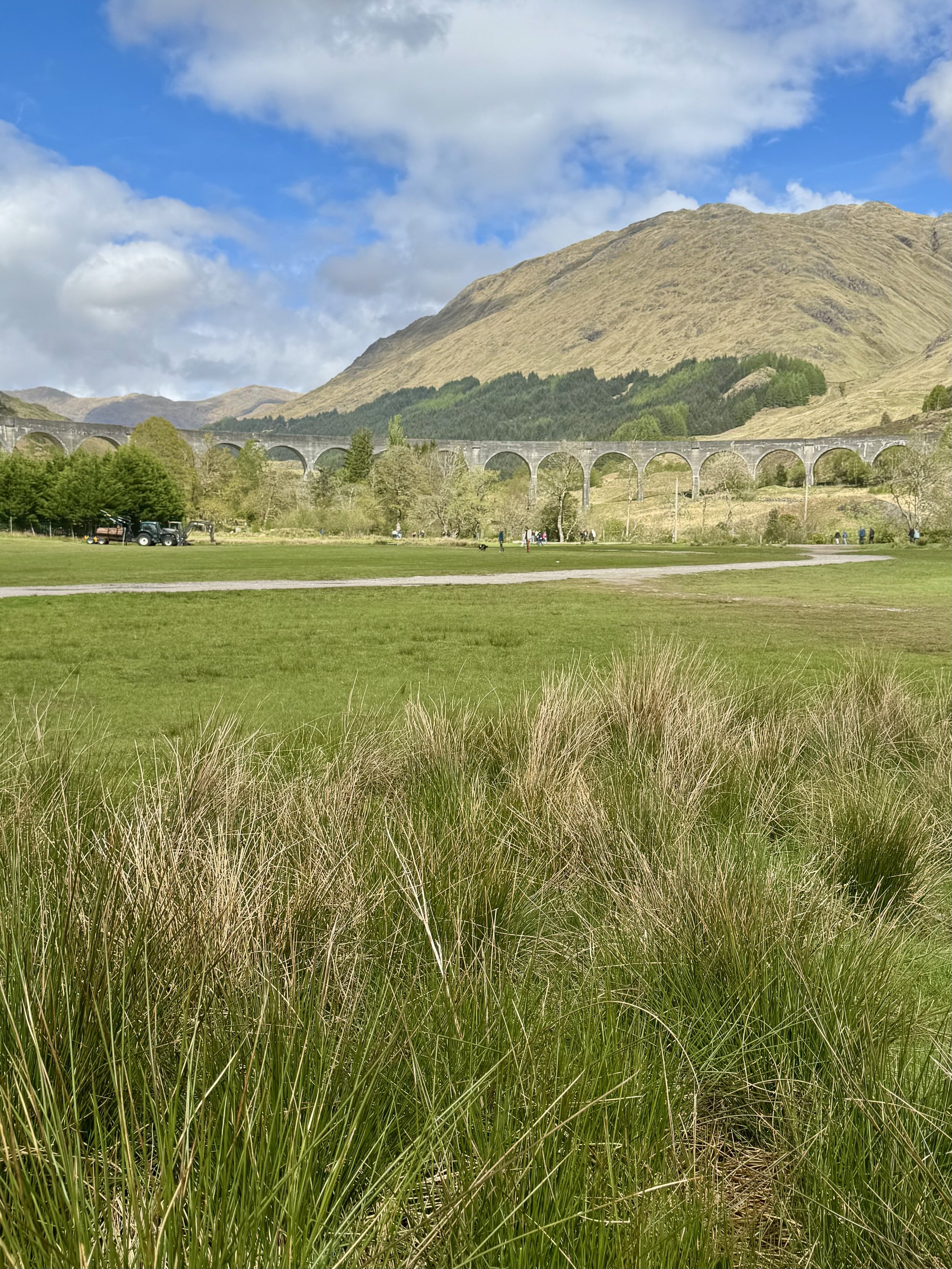
Glenfinnan Viaduct
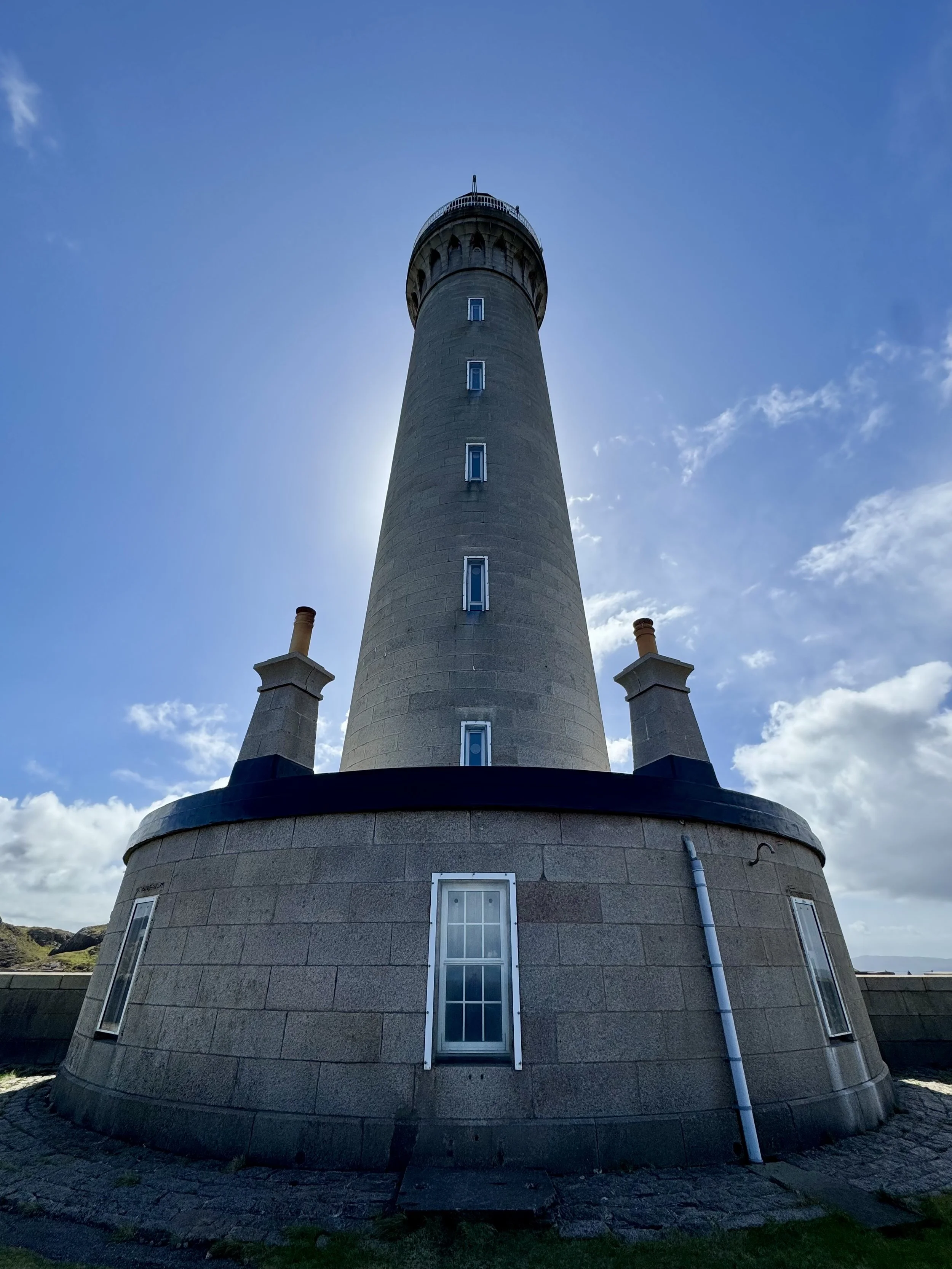
Ardnamurchan Lighthouse, Kilchoan, Acharacle, Scotland
Ardnamurchan Point and Lighthouse
Latitude 56°43.619'N
We were pre-warned that the drive to the lighthouse is on a winding single-track road and not ideal for a nervous driver. Coming from Jersey, we knew we’d be fine, and, having navigated a large motorhome around the many tiny roads on the Shetlands, this drive was fine. It took ninety minutes, in part because we kept stopping to take more photos of lochs and scenic views of the Scottish Highlands.
This was the only place we saw Highland cows (or ‘coos’ as the Scots call them). A herd of fourteen were wild grazing on the edge of the road not far from the lighthouse. None of them had the huge horns we’re so accustomed to seeing in photos, so I guess they may have been dehorned, but it was great to see them.
There was an unexpected set of traffic lights at the base of the lighthouse hill, which were the first we had seen since leaving Fort William. We spent half an hour wandering around, and could easily see some of the Hebrides: Rum, Eigg, Muck, and Coll.
The lighthouse is 55 metres tall and was built by Alan Stevenson, a relation of the author Robert Louis Stevenson.
Another First, ticked off my 60 Firsts list.
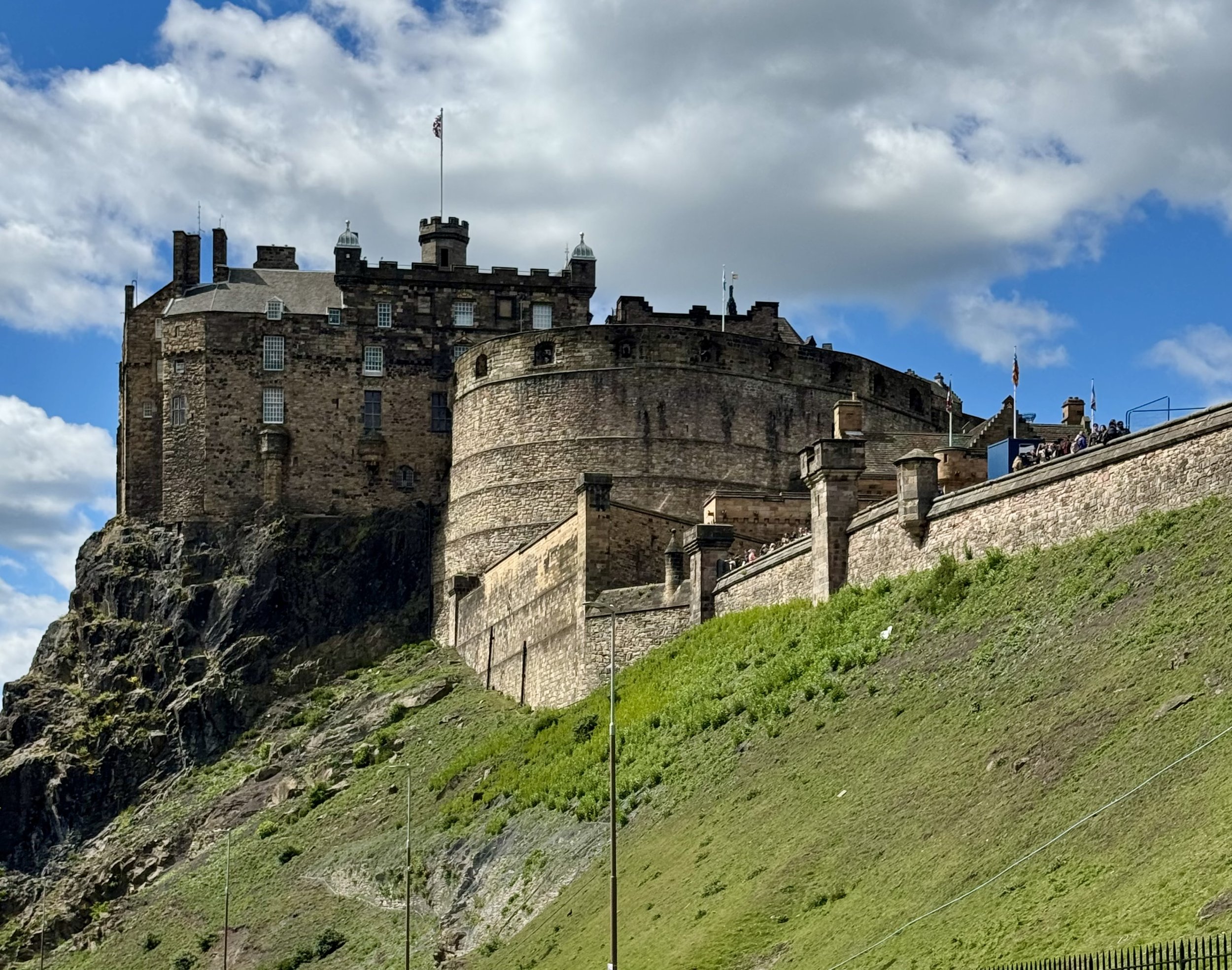
The imposing Edinburgh Castle
Ardnamurchan Point to Edinburgh - Car and bus
Having dropped the hire car back, we got on the pre-booked Ember bus at Fort William’s An Aird carpark, settling in for a four hour journey from the Scottish west coast to the east, arriving at 20:20.
We had two whole days in the Scottish capital and wanted to cram in as much as possible, including a trip to Falkirk to see The Kelpies and Falkirk Wheel. As it happened, the bus drove past The Kelpies, saving us some time.
Edinburgh was so different to what I expected, and I understand why people fall in love with the city. Arthur’s Seat rises from the city and was one of the reasons I wanted to visit, as I wanted to walk to the top.
I’m going to write a separate blog about the capital visit, which I’ll link here at a later date.
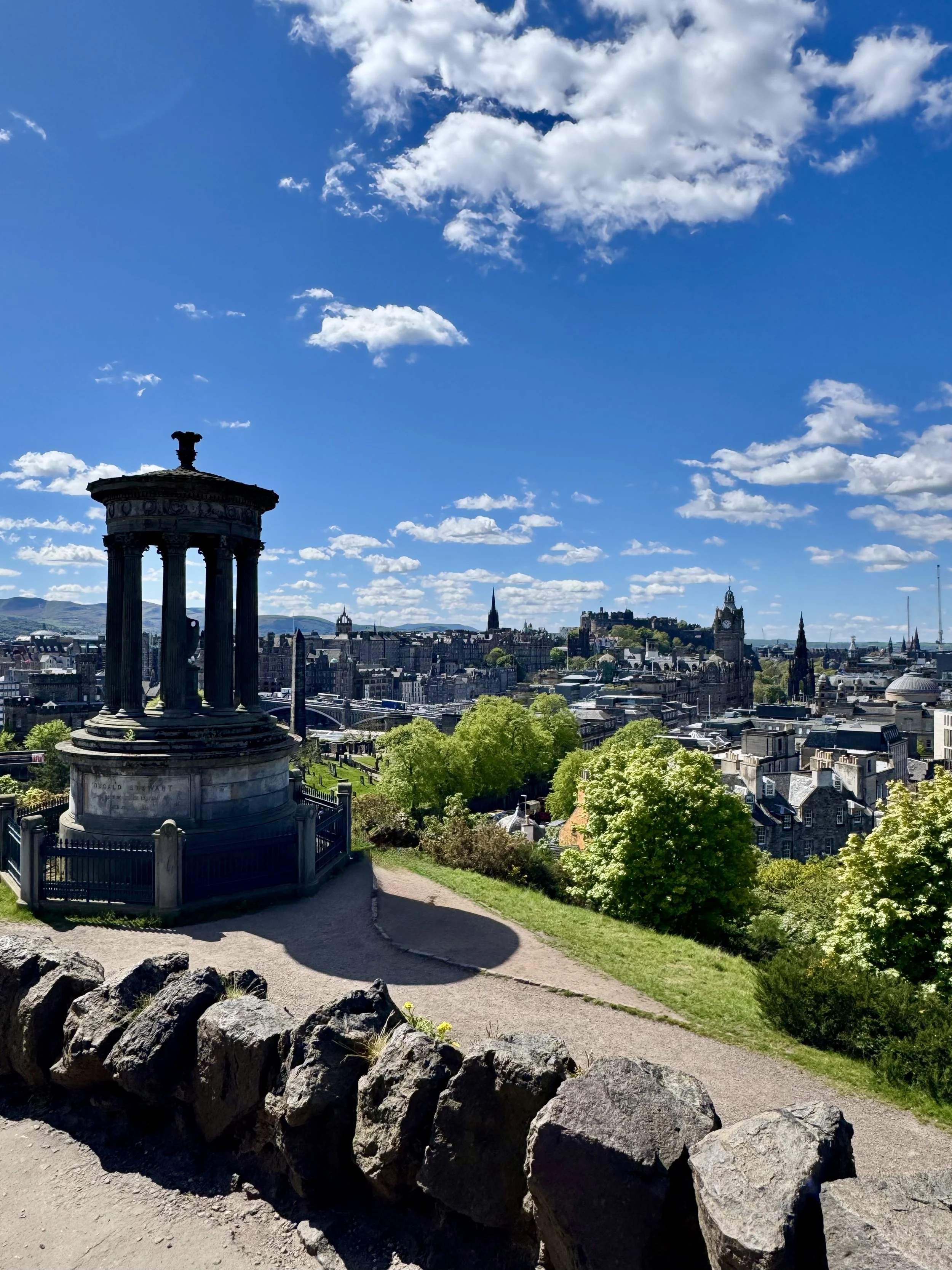
View of Edinburgh from Calton Hill
Edinburgh to Devon - Train
The journey home was also something I had never done before - an eight hour train ride in the daytime.
Honest opinion, the Cross Country train was not what I had hoped. It needed a lot of TLC and was cramped for such a long journey. Sadly, it’s put me off doing an Interrail trip around Europe, which I was thinking about for next year.
After twelve intense but exhilarating days, my Scottish adventure ended, leaving me with fabulous memories, lots of ticks off my bucket list, and the desire to return in the not-too-distant future.